
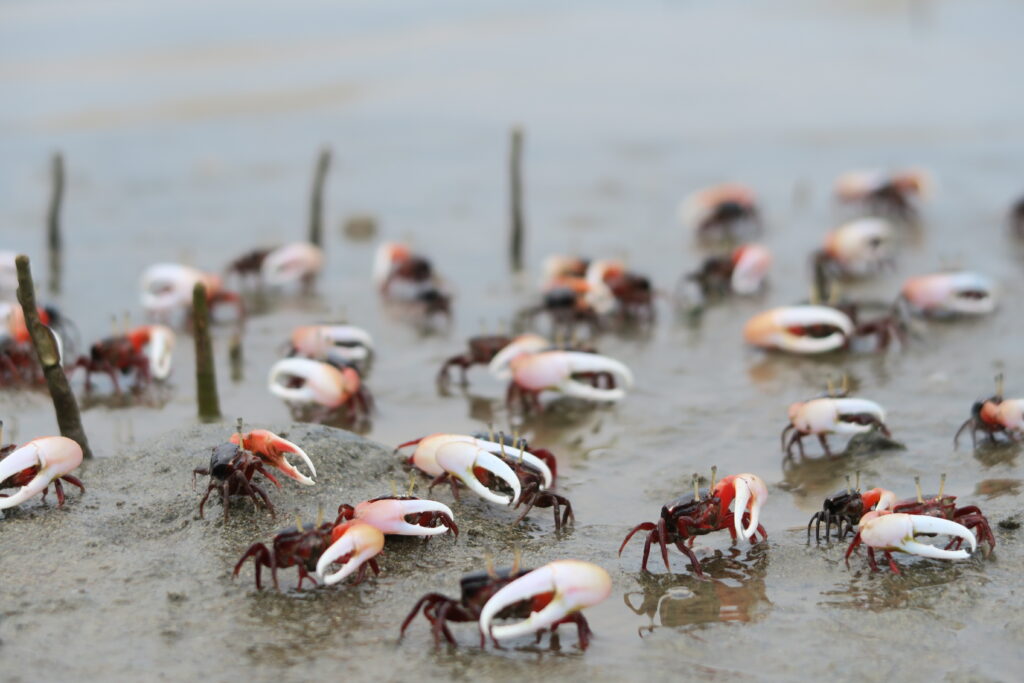
Fiddler crabs, known for their distinctive asymmetric claws, have been native to the southern part of the United States’ Atlantic coast, typically found in salt marshes as far north as Cape Cod. However, due to climate change and the consistent warming of the Gulf of Maine, these small crustaceans have expanded their range and have begun to appear in midcoast Maine salt marshes. This migration has raised questions regarding their impact on the grasses that grow within these marshes, as the fiddler crabs burrow into the soil where these grasses take root.
David Johnson, an associate professor at the Virginia Institute of Marine Science, recently co-authored a study in Ecology concerning the effects of fiddler crabs on salt marshes north of their traditional range. The study found that fiddler crabs may harm the growth of grasses in these marshes, reducing the amount of grass by 40 percent and the amount of grass roots by 30 percent. This outcome was unexpected, as fiddler crabs have been observed to support the growth of similar salt marsh grasses in more southern regions such as Cape Cod. The reasons behind this negative impact on grass growth in the northern salt marshes remain unclear, but the potential consequences may include reduced carbon sequestration and diminished coastal protection against sea-level rise and storm surges.



Add comment