

Dolphins and whales share a common aquatic environment and are both members of the marine mammal group known as cetaceans. This diverse group includes the planet’s most intelligent and complex marine creatures. Despite being part of the same cetacean family, dolphins and whales exhibit notable differences in behavior, social structures, and physical characteristics.
Physical Characteristics

Dolphins and whales display distinct physical characteristics that vary significantly between species, particularly in terms of body size, shape, and anatomical features. These differences are key in adapting each species to their unique aquatic environments.
Size and Shape
Dolphins typically possess a streamlined body and can measure up to 4 meters in length, with some larger species like the orca, which is actually a type of toothed whale, reaching up to 8 meters. Whales, on the other hand, have more diverse body sizes. Baleen whales such as the blue whale can grow up to a staggering 30 meters long, making them the largest animals on the planet. Toothed whales are generally smaller, though some like the sperm whale can grow up to 20 meters.
Dolphin:
- Length: Up to 4 meters
- Shape: Streamlined
Toothed Whale:
- Length: Up to 20 meters
- Shape: Varied, often larger heads
Baleen Whale:
- Length: Up to 30 meters
- Shape: Massive bodies, relatively small heads
Anatomical Differences
Teeth differentiate many species of dolphins and toothed whales from baleen whales. Dolphins and toothed whales have conical teeth suited for capturing fish or other marine creatures, while baleen whales have baleen plates used for filter-feeding. Another major feature is the dorsal fin; dolphins typically have a pronounced dorsal fin for stability, whereas some baleen whales, like the blue whale, may have smaller or no dorsal fin. The blowhole varies between the two, with dolphins having a single blowhole and baleen whales possessing two.
Echolocation is a sensory feature prominent in dolphins and toothed whales, allowing them to navigate and hunt using sound waves. The fluke, or tail fin, in both dolphins and whales is horizontal and drives their forward movement through the water. While both have a similar function, they can differ in shape and size across species.
Lastly, all cetaceans, including dolphins and whales, lack true hair, and their body size influences their thermoregulation in aquatic environments.
Teeth and Baleen:
- Dolphins/Toothed Whales: Teeth, conical in shape.
- Baleen Whales: Baleen plates for filter feeding.
Dorsal fin and Fins:
- Dolphin: Pronounced dorsal fin.
- Whale: Size and presence of dorsal fin varies.
Blowhole:
- Dolphin: Single blowhole.
- Baleen Whale: Dual blowholes.
Echolocation:
- Present in toothed whales and dolphins.
Fluke:
- Function: Used for propulsion in water.
- Variation: Shape and size differ among species.
Hair:
- Absent in adult cetaceans.
Body Size:
- Influences thermoregulation in water.
Species and Classification

Whales and dolphins belong to the order Cetacea, which is divided into two suborders: Mysticeti (baleen whales) and Odontoceti (toothed whales, including dolphins and porpoises). Each group contains species with distinct features suited to their oceanic habitats.
Cetacean Families
Cetacea includes a variety of marine mammals, all of which are adapted for life in the water. Mysticeti, commonly known as baleen whales, filter feed using baleen plates. In contrast, Odontoceti are toothed creatures that include dolphins, porpoises, and all other species of whales that use echolocation to hunt.
Mysticeti (Baleen Whales)
- Blue Whale (Balaenoptera musculus)
- Humpback Whale (Megaptera novaeangliae)
Odontoceti (Toothed Whales)
- Sperm Whale (Physeter macrocephalus)
- Killer Whale or Orca (Orcinus orca)
- Bottlenose Dolphin (Tursiops truncatus)
Notable Whale and Dolphin Species
Among the Odontoceti, the Killer Whale, also known as the Orca, is one of the most recognizable thanks to its striking black and white pattern. The Sperm Whale is known for its large head and the ability to dive deeply. In the world of baleen whales, the Blue Whale holds the title for the largest animal on Earth, while the Humpback Whale is celebrated for its complex vocalizations and acrobatics.
Dolphins (Family Delphinidae)
- Common Bottlenose Dolphin
- Long-snouted Spinner Dolphin (Stenella longirostris), notable for bow-riding in areas like the Red Sea.
Porpoises (Family Phocoenidae)
- Harbour Porpoise (Phocoena phocoena)
Arctic Whales
- Beluga Whale (Delphinapterus leucas)
- Narwhal (Monodon monoceros)
Each species’ adaptation, behavior, and physiology reflect the niche it occupies in the marine ecosystem, showcasing the diversity within the cetacean families.
Behavior and Communication

In the vast marine world, both dolphins and whales exhibit complex social structures and sophisticated communication methods. These traits reflect the advanced intelligence of these cetaceans.
Social Structures
Dolphins are known for their dynamic social behavior, primarily living in groups known as pods. These pods can vary in size from a few individuals to more than a thousand. Within these social structures, dolphins engage in activities like cooperative hunting and play. They care for their calves, often seen swimming beside them. These tight-knit communities provide mutual protection and help in rearing young.
Whales also live in social groups, although the structure can greatly differ depending on the species. For instance, some baleen whales undertake long migratory journeys in groups, while other species are more solitary or found in small groups. Social behavior in whales includes cooperative feeding strategies, where they may corral squid or krill into tight swarms making them easier to consume.
Communication Methods
Dolphins have a rich repertoire of communication sounds and methods. They use a combination of clicks, whistles, and body language to convey messages to each other. Research shows a relationship between the behavior of Hector’s dolphins and their use of clicks, indicating a complex vocalization system for individual and group interactions.
Whales communicate over large distances through low-frequency sounds that can travel for miles underwater. Each species employs distinct vocalizations, which can indicate emotional states or coordinate group behaviors. Some species, like the sperm whale, use codas — patterns of clicks — which might communicate individual identity or social information.
Both dolphins and whales use echolocation for navigation and foraging, which is also a form of acoustic communication with their environment. This sonar-like capability allows them to detect and hunt squid in the dark depths of the ocean or to find schools of krill with precision.
Habitat and Diet
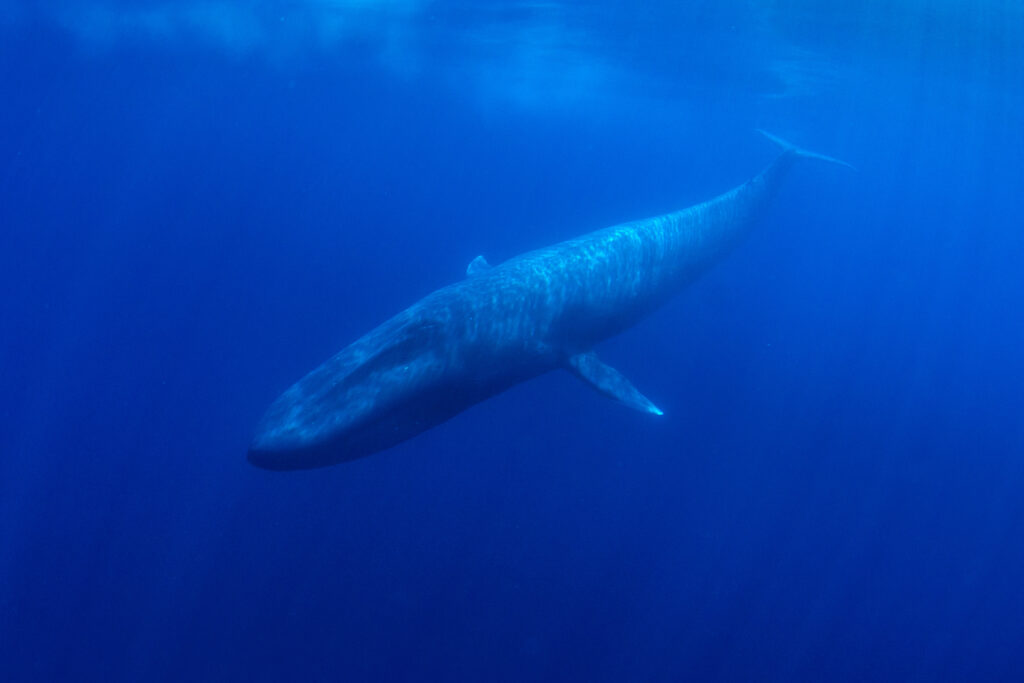
Dolphins and whales exhibit distinct behaviors and preferences in their feeding practices and habitat regions, which are largely influenced by their physiology and ecological niche.
Feeding Practices
Dolphins are well-known for their diverse and opportunistic feeding strategies. They predominantly feed on fish and squid, using their sharp teeth to grasp prey. Sophisticated hunting techniques, such as herding and utilizing echolocation, allow them to locate and capture food efficiently. For example, the common dolphin displays a quantitative analysis of its diet in the oceanic Northeast Atlantic, demonstrating a tailored approach to feeding in fully oceanic habitats.
In contrast, whales vary greatly in their diets depending on the species. The baleen whales filter plankton and small fish with their baleen plates, while toothed whales can consume larger prey, including sea mammals and sharks. Their feeding methods align with their dietary requirements and can impact the cost of living in their environments, with the importance of prey quality influencing their foraging strategies.
Habitat Regions
Dolphins tend to favor warm shallow waters but can also be found in cooler oceanic regions. Their habitats stretch from coastal areas to deep-sea environments. For instance, studies on sympatric ecology reveal how different dolphin species share the same immediate habitat without geographical separation, indicating a robust adaptability to various marine landscapes.
Whales, however, range from coastal to open ocean habitats and can be found in polar, temperate, and tropical waters. Their large body length and lung-based breathing enable them to travel great distances across the oceans. Habitat preferences are often aligned with food availability and can dictate the species distribution. Some species, such as baleen whales, migrate to feed on abundant krill and plankton, while toothed whales may reside in deeper waters to hunt large marine animals or crustaceans.
Conservation and Threats

Whales and dolphins, members of the cetacean family, are conscious breathers facing a variety of threats that impact their survival. These threats originate from both human activities and natural challenges, affecting their delicate role in the ecosystem. Their lengthy gestation periods also make population recovery a slow process, highlighting the importance of effective conservation efforts.
Human Impacts
Climate Change:
- Physical Changes: The rising temperatures alter oceanic environments, impacting the distribution and abundance of prey species critical to cetaceans.
- Habitat Loss: Sea ice retreat in polar regions and coral reef degradation affect the natural habitats of various whale and dolphin species.
Direct Human Activities:
- Fishing Interactions: Bycatch in fishing gear is a significant threat, entangling and often killing these mammals.
- Vessel Strikes: Increasing maritime traffic leads to more collisions with cetaceans, which can be fatal.
Pollution:
- Chemical: Contaminants like mercury and PCBs accumulate in the food chain, with cetaceans often ending up with high levels in their bodies.
- Acoustic: Noise pollution from ships and industrial activities disrupts cetaceans’ communication and navigation.
Conservation Efforts: Efforts to mitigate these human impacts include establishing marine protected areas and implementing stricter fishing regulations. Research on threats to whale and dolphin populations points to culture and behavior also playing a crucial role in how these species respond to conservation measures.
Natural Challenges
Predation: Large predators like sharks and orcas pose natural threats, especially to young and weaker individuals.
Disease and Parasites: As biological entities, cetaceans are susceptible to biological threats, including diseases and parasites that can lead to devastating population declines.
Reproductive Factors: The long gestation period in whales and dolphins means that recovering populations is a time-intensive process. Further complicating this is the fact that many species have calving intervals spanning several years.
Collaborative Conservation: Understanding the ecology and human-related threats to species such as the endangered franciscana dolphin elucidates how intertwined human and natural challenges are, and why a combined effort is crucial for the effective conservation of cetaceans.



Add comment