
Narwhals are known for their long, spiral tusks that can grow up to 10 feet in length. These unique creatures are often referred to as the “unicorns of the sea” due to their striking appearance. However, some people may wonder if narwhals are real or just a myth.
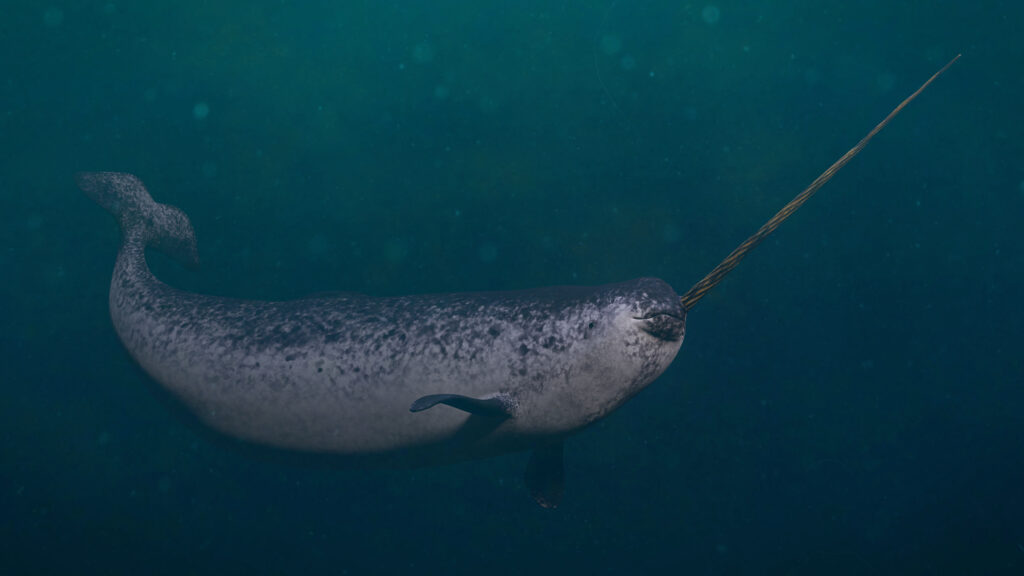
The answer is yes, narwhals are real animals that inhabit the Arctic waters of Canada, Greenland, Norway, and Russia. These medium-sized whales are known for their distinctive tusk, which is actually a long, protruding tooth that grows through the upper lip of the male narwhal. The tusk can be used for a variety of purposes, including foraging for food, fighting, and mating displays. Female narwhals also have tusks, but they are smaller and less noticeable than those of males.
Despite being a real species, narwhals have been surrounded by mystery and mythology for centuries. In Inuit folklore, the narwhal tusk was believed to have magical powers and was often used in shamanic rituals. Today, narwhals are facing threats from climate change and habitat loss, as well as hunting by indigenous communities for subsistence purposes. Understanding the biology and behavior of these fascinating creatures is crucial for their conservation and protection in the future.
Narwhal Anatomy

Narwhals are a unique species of whale that inhabit the Arctic waters. They have a distinctive tusk, which is actually a canine tooth that can grow up to 3 meters in length. The tusk is present in both males and females, but it is more prominent in males.
Tusk Characteristics
The narwhal tusk is composed of ivory and has a spiral shape. It is believed that the tusk is used for sensory purposes, as it contains thousands of nerve endings. The tusk is also used for social interactions and for hunting prey.
Body Features
Narwhals have a streamlined body and a dorsal fin that is low and broad. They have two flippers and a fluke for swimming. Adult males can grow up to 5 meters in length, while females are slightly smaller at around 4 meters.
Color and Pattern
Narwhals have a mottled gray coloration on their skin, which helps them blend in with their environment. They also have a white underside, which is used for camouflage from predators below.
Sexual Dimorphism
Male narwhals have a more prominent tusk than females, which can be used in displays of dominance or for fighting. Females also have a shorter tusk, which may not grow past the gum line.
Scientific Classification
The scientific name for the narwhal is Monodon monoceros, and they belong to the family Monodontidae. They are closely related to beluga whales and are the only living species in the Monodontidae family.
Habitat and Distribution

Narwhals are a species of toothed whales that inhabit the Arctic waters of Greenland, Canada, and Russia. They are typically found in coastal waters and inlets, as well as in pack ice during the winter months. Narwhals are known to migrate long distances, with some individuals traveling over 1,000 kilometers in a single year. In recent years, there have been reports of narwhals being spotted in the waters off the coast of Norway, which may be an indication of a changing climate.
Climate and Environment
Narwhals are adapted to living in the harsh Arctic environment, where temperatures can drop to -40°C in the winter months. They are able to survive in these extreme conditions by relying on their thick layer of blubber for insulation, as well as their ability to dive to great depths in search of food. Narwhals feed on a variety of fish and invertebrates, including Arctic cod, squid, and shrimp.
The Arctic environment is changing rapidly due to climate change, and this is having a significant impact on the habitat and distribution of narwhals. The melting of sea ice is causing changes in the distribution of prey resources, which may be affecting the behavior and distribution of narwhals. In addition, the presence of Arctic killer whales is also thought to be disrupting the behavior and distribution of narwhals, as they are a known predator of this species.
Diet and Feeding Behavior

Narwhals are carnivores, and their diet primarily consists of fish, squid, and shrimp. They are opportunistic feeders, meaning they will eat whatever prey is available to them. Their prey of choice varies depending on the season and location.
Primary Prey
In the summer months, narwhals primarily feed on Greenland halibut and Arctic cod. These two fish species make up the majority of their diet during this time. In the winter, narwhals switch to feeding on squid and shrimp, as these prey items are more abundant in the Arctic waters.
Feeding Techniques
Narwhals use a variety of feeding techniques to capture their prey. They are known to use suction feeding, where they suck in water and prey through their mouth, as well as ram feeding, where they use their head to stun their prey before consuming it. They are also capable of deep diving to catch their prey, with some individuals diving as deep as 1,500 meters.
Narwhals are able to locate their prey using echolocation, a process that involves emitting sounds and listening for the echoes that bounce back. This allows them to locate prey in the dark and murky waters of the Arctic.
Behavior and Lifestyle

Narwhals are social animals that live in groups called pods. These pods can range in size from a few individuals to several hundred. Within these pods, narwhals exhibit a hierarchical social structure with dominant males leading the group.
Social Structure
Narwhals are known for their unique tusks, which are actually elongated canine teeth that can grow up to 10 feet in length. These tusks are primarily found in males and are used for dominance displays within the pod.
Diving and Surfacing
Narwhals are deep divers and can reach depths of up to 5,000 feet. They typically dive for around 25 minutes, but have been known to stay underwater for up to 45 minutes. When they surface, they exhale through their blowhole, creating a distinctive “tusk splash” that is thought to be a form of communication within the pod.
Communication and Sound
Narwhals use a variety of vocalizations to communicate with each other, including whistles, clicks, and pulsed sounds. These sounds are thought to play a crucial role in pod cohesion and social behavior. Narwhals are also known for their ability to navigate and locate prey using echolocation, a process in which they emit sounds and listen for echoes to determine the location of objects in their environment.
Predation and Threats

Narwhals are not immune to threats from predators, both natural and human. This section will discuss the natural predators and human interactions that pose a threat to narwhals.
Natural Predators
Polar bears and killer whales (orcas) are the two natural predators of narwhals. Polar bears are known to attack and kill narwhals when they surface for air. However, polar bear predation on narwhals has been rarely observed, and it is not a significant threat to the species. Killer whales, on the other hand, pose a more significant threat to narwhals. A study published in PNAS found that narwhals sustained disruption of their habitat use and behavior in the presence of Arctic killer whales, resulting in changes in their movement patterns and space use under perceived or real predation risk.
Human Interaction
Inuit hunters have been harvesting narwhals for subsistence purposes for centuries. However, with the introduction of modern hunting tools and techniques, the number of narwhals harvested has increased significantly, posing a threat to the species. The Inuit people have a deep cultural connection to narwhals, and they are allowed to hunt them under the Marine Mammal Protection Act. The WWF works with Inuit hunters to promote sustainable hunting practices and reduce the impact on narwhal populations.
Apart from hunting, human activities such as shipping, oil and gas exploration, and climate change also pose a threat to narwhals. Shipping and oil and gas exploration can cause noise pollution, which can disrupt narwhal communication and behavior. Climate change is leading to the melting of Arctic sea ice, which is the primary habitat of narwhals. The loss of sea ice can lead to a decline in the availability of prey and increase the risk of predation by killer whales.
Reproduction and Life Cycle

Narwhals, like other toothed whales, are sexually dimorphic, with males being larger than females. Male narwhals reach sexual maturity at around 8-10 years of age, while females reach maturity at around 5-8 years of age. During the mating season, which occurs in the spring and summer months, males will compete for dominance and the chance to mate with females. Dominant males will use their tusks to intimidate and attack other males, and will also use vocalizations to attract females.
Females give birth to a single calf after a gestation period of approximately 14 months. Calves are born in the summer months and are nursed for up to 20 months. After weaning, young narwhals will stay with their mothers for several more years before becoming independent.
Life Span and Growth
Narwhals have a relatively long lifespan compared to other toothed whales, with individuals living up to 50 years in the wild. However, little is known about their growth and development due to the difficulty in studying these elusive animals.
Research has shown that narwhals have a slow rate of reproduction, with females giving birth to a single calf once every 3-4 years. This, coupled with their long lifespan, means that narwhal populations are particularly vulnerable to overhunting and other threats.
Conservation Status
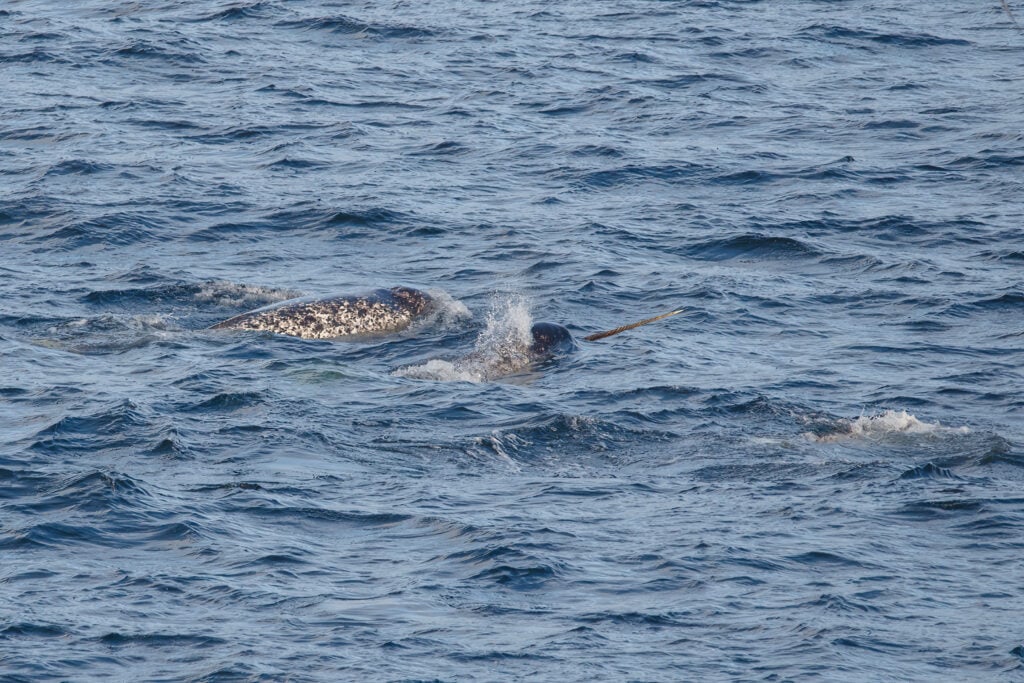
The narwhal, a medium-sized toothed whale, is currently listed as “near threatened” on the International Union for Conservation of Nature (IUCN) Red List of Threatened Species. This classification is due to the species’ susceptibility to climate change and habitat degradation, as well as the impact of hunting and fishing practices.
According to a global review of the conservation status of monodontid stocks, which includes both beluga and narwhal stocks, the narwhal population is estimated to be around 170,000 individuals. However, some subpopulations are experiencing declines due to hunting and climate change. In particular, the Baffin Bay and Greenland Sea subpopulations are considered to be at high risk of population decline due to hunting practices and climate change impacts on sea ice.
Efforts are being made to protect narwhals and their habitat. For example, the Canadian government has implemented a quota system to limit the hunting of narwhals by indigenous communities. Additionally, the Narwhal Tusk Task Force, a collaboration between Inuit communities, government officials, and conservation organizations, is working to address the illegal trade of narwhal tusks.

Add comment