
Narwhals are fascinating creatures that inhabit the Arctic waters of Canada, Norway, and Greenland.

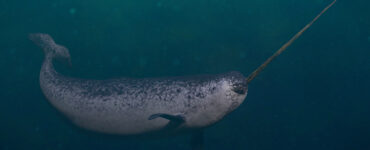
They are known for their long, spiral tusks that can grow up to 10 feet in length.
However, not much is known about their diet and feeding habits. In this article, we will explore what narwhals eat and how they obtain their food.
Despite their large size, narwhals have relatively small mouths and throats, which limits the size of the prey they can consume.
They are also deep divers, capable of diving to depths of up to 1,500 meters, which allows them to access a wide range of food sources.
However, their feeding habits and diet can vary depending on their location and the availability of prey.
Key Takeaways
- Narwhals are toothed whales that primarily eat fish, such as Greenland halibut, Arctic and Polar cod, and squid.
- They swallow their food whole because their teeth are not designed for chewing.
- Their feeding habits and diet can vary depending on their location and the availability of prey.
Physical Characteristics of Narwhals

Narwhals are a unique species of whale that inhabit the Arctic waters. They are easily recognizable due to their long tusks that protrude from their upper jaws.
These tusks are actually elongated teeth and can grow up to 3 meters in length.
Tusks and Teeth
The tusks of narwhals have been the subject of much speculation and fascination. It was originally believed that they were used for hunting or breaking through ice.
However, recent studies have suggested that they may actually be used for communication and navigation.
The tusk is actually a single tooth that has been modified over time and contains millions of nerve endings.
Male narwhals tend to have larger tusks than females, and it is believed that they may use them in displays of dominance during mating season.
Females also have tusks, but they are generally smaller and less prominent than those of males.
Size and Weight
Narwhals are medium-sized whales and can grow up to 5.5 meters in length. Females are generally smaller than males and can weigh up to 1,360 kg, while males can weigh up to 1,800 kg.
In addition to their tusks, narwhals are also known for their unique bodies. They have a stocky, cylindrical shape that is designed to help them navigate through the icy waters of the Arctic.
Their skin is also thick and blubberous, which helps to insulate them from the cold water.
Habitat and Distribution

Narwhals are toothed whales that inhabit the Arctic region, including Canada, Greenland, Russia, and Norway.
They are found in Arctic waters, which are covered by pack ice for most of the year. Narwhals prefer to live in areas with sea ice, but they also inhabit open water areas near the coast.
Arctic Region
Narwhals are adapted to live in the extreme conditions of the Arctic region. They have a thick layer of blubber that helps them stay warm in the cold water.
They are also able to dive to great depths in search of food, and they can hold their breath for up to 25 minutes.
Narwhals are known to migrate to different areas of the Arctic depending on the season. During the winter, they are found in areas with pack ice, while in the summer, they move to coastal areas.
Inuit Communities
Narwhals have been an important source of food and materials for Inuit communities for centuries. Inuit hunters traditionally hunted narwhals for their meat, skin, and ivory tusk.
The ivory tusk is used to make tools, weapons, and carvings. Inuit hunters have a deep understanding of narwhal behavior and habitat, and they have developed hunting techniques that are sustainable and respectful of the animal.
Diet and Feeding Habits

Narwhals are known to be dietary specialists with little behavioral flexibility, and their diet consists mainly of fish, squid, and shrimp.
According to a study by Pomerleau et al., the narwhals’ diet varies depending on their location.
For example, in the eastern Canadian Arctic, narwhals primarily feed on Greenland halibut, Arctic cod, and polar and Arctic cod. In contrast, West Greenland narwhals consume less pelagic prey and more benthic prey, including capelin and gonatus squid.
Feeding Methods
Narwhals use their sharp, pointed tusks as a sensory organ to detect changes in the environment.
They also use echolocation to locate their prey, emitting high-frequency clicks and listening for the echoes that bounce back.
When hunting, narwhals dive to depths of up to 1,500 meters and can hold their breath for up to 25 minutes. They use their strong tail flukes to propel themselves through the water and catch their prey.
According to a study by Dietz et al., male narwhals’ feeding habits change over time. They found that the males’ tusks contain a record of their feeding ecology and mercury exposure over their lifetime.
The study showed that male narwhals’ diet varies throughout their life, with a shift from a diet of Arctic cod and Greenland halibut when they are young to a diet of gonatus squid and shrimp when they are older.
Predators and Threats

Narwhals have several natural predators, including polar bears, walruses, and killer whales (orcas).
Polar bears are the largest land predators and are known to hunt narwhals when they surface for air. Walruses also prey on narwhals, particularly young calves, by attacking them from below.
Killer whales are the most significant natural predators of narwhals, and their presence can significantly disrupt narwhal behavior and habitat use [1].
Sharks are also known to prey on narwhals, but these attacks are rare and poorly documented [2].
Human Impact
In addition to natural predators, narwhals face threats from human activities. Inuit hunters have traditionally hunted narwhals for their meat, blubber, and ivory tusks, which are highly valued for their use in carvings and other traditional handicrafts.
While hunting practices have become more regulated in recent years, overhunting in the past has contributed to declines in some narwhal populations [3].
Climate change is also a significant threat to narwhals, as it is causing changes in sea ice patterns and ocean temperatures that can disrupt their habitat and food sources. Changes in sea ice can also make it more difficult for narwhals to escape predators like polar bears and killer whales [4].
Finally, the demand for narwhal ivory in international markets has also contributed to the decline of some populations.
While the international trade of narwhal ivory is regulated under the Convention on International Trade in Endangered Species (CITES), illegal trade continues to be a problem in some areas [5].
References:
[1] Sustained disruption of narwhal habitat use and behavior in the presence of Arctic killer whales. (2017). Proceedings of the National Academy of Sciences, 114(10), 2628-2633. doi: 10.1073/pnas.1611707114 [2] Predation on marine mammals. (2009). In Encyclopedia of Marine Mammals (Second Edition) (pp. 958-961). Academic Press. doi: 10.1016/B978-0-12-373553-9.00210-8 [3] Hunting narwhals in Nunavut. (2022, August 22). Government of Canada. https://www.canada.ca/en/environment-climate-change/services/species-risk-public-registry/cosewic-assessments-reviews/narwhal-2016/hunting-narwhals-nunavut.html [4] Laidre, K. L., Heide-Jørgensen, M. P., Dietz, R., Hobbs, R. C., Jørgensen, O. A., & Nielsen, T. G. (2015). Deepened winter mixed layer and higher primary productivity in the North Water Polynya are not linked to increased zooplankton biomass. Limnology and Oceanography, 60(4), 1241-1251. doi: 10.1002/lno.10101 [5] Ivory trade. (n.d.). World Wildlife Fund. https://www.worldwildlife.org/threats/ivory-tradeConservation Status and Efforts

Narwhals are currently classified as “near threatened” by the International Union for Conservation of Nature (IUCN).
This means that while they are not yet considered endangered, they are at risk of becoming so in the near future.
The main threat to narwhals is climate change, which is causing the Arctic sea ice to melt at an alarming rate. Narwhals depend on this ice for their survival, as it provides a platform for them to rest, mate, and feed.
In addition to climate change, narwhals are also threatened by hunting. While commercial hunting of narwhals has been banned since the 1970s, subsistence hunting by indigenous communities is still allowed in some areas.
This hunting is regulated by the communities themselves, but there are concerns that it may be unsustainable in the long term.
Conservation Initiatives
There are several initiatives underway to help protect narwhals and ensure their survival in the face of these threats.
One such initiative is the Narwhal Conservation Strategy, which was developed by the Canadian government in collaboration with indigenous communities.
This strategy aims to promote the sustainable use of narwhals by indigenous communities, while also protecting the species from over-harvesting.
Another initiative is the Narwhal Tusk Project, which aims to study the narwhal’s tusk to better understand its role in the species’ survival.
The project is also working to reduce the illegal trade in narwhal tusks, which is a major threat to the species.
Frequently Asked Questions
What is the typical diet of narwhals?
Narwhals are primarily carnivorous and feed on a variety of prey including fish, squid, shrimp, and other crustaceans. They are known to consume Arctic and polar cod, capelin, and Greenland halibut.
Do narwhals eat fish or other sea creatures?
Yes, narwhals eat fish and other sea creatures. They are known to consume a variety of prey including Arctic and polar cod, capelin, and Greenland halibut, as well as squid, shrimp, and other crustaceans.
How much do narwhals eat in a day?
The amount of food that narwhals consume in a day varies depending on several factors, including the size and age of the individual, as well as the availability of food in their environment.
What is the nutritional value of a narwhal’s diet?
The nutritional value of a narwhal’s diet varies depending on the specific prey they consume. However, many of the fish and other sea creatures that narwhals eat are high in protein, omega-3 fatty acids, and other important nutrients.
Do narwhals have any natural predators?
Narwhals have few natural predators, but they are occasionally preyed upon by killer whales and polar bears.
In addition, humans have historically hunted narwhals for their ivory tusks and meat, which has led to declines in some populations.
How does a narwhal’s diet affect its behavior and habitat?
A narwhal’s diet can have an impact on its behavior and habitat. For example, changes in the availability of certain prey species can affect the migration patterns and distribution of narwhals.
In addition, changes in the ocean environment, such as melting sea ice, can alter the availability and distribution of prey species, which can have cascading effects on the entire Arctic ecosystem.
Add comment