

Shark encounters, though exceedingly rare, have significant consequences for both humans and the marine predators themselves. In a world where the wellbeing of oceanic ecosystems is increasingly prioritized, traditional methods such as net barriers to protect beachgoers have come under scrutiny for their detrimental impact on marine life. Countering this, innovative solutions like the SharkSafe Barrier present a promising alternative, aiming to protect human lives while respecting the delicate balance of the underwater world.
Following recent incidents, including a tragic event in the Bahamas, the discussion of shark-human interactions has surged, highlighting the duality of preserving human safety and shark conservation. The SharkSafe Barrier employs magnetic technology to create a deterrent effect that capitalizes on sharks’ sensitivity to magnetic fields. This method offers a non-invasive option to minimize the risk of shark bites, potentially revolutionizing the way we coexist with these misunderstood oceanic inhabitants.
A Novel Protection Method Balancing Human and Shark Safety

Innovative technologies are emerging to maintain harmony between human activities in coastal regions and the thriving populations of sharks that inhabit these waters. A promising development is the SharkSafe Barrier system, which harmoniously combines shark deterrent properties with environmental conservation efforts, particularly in regions like South Africa where interactions between humans and marine life are frequent.
The SharkSafe Barrier leverages magnetic deterrents to discourage sharks, based on their unique biological systems. Sharks possess an organ known as the ampullae of Lorenzini, finely tuned to electromagnetic signals in the sea, helping them navigate and hunt. When encountering the strong magnetic fields generated by the barrier’s permanent magnets, a shark’s sensitive biology experiences a harmless yet effective deterrent effect, akin to an olfactory overload in humans from intense scents.
This eco-friendly technology, devised by scientists like Sara Andreotti from Stellenbosch University, presents an alternative to traditional shark nets. The design mimics a kelp forest, which naturally deters various species such as white sharks and bull sharks, as they generally avoid dense kelp. Additionally, the appearance of artificial kelp adds a visual element to the physical barrier, further dissuading sharks without harming them.
During a trial conducted near the Berry Islands in the Bahamas, a stretch of these barriers exhibited promising results, hinting at efficacy in not only safeguarding human lives but also in supporting the well-being of sharks. Notably, the structure’s materials and design aim to minimize any adverse impacts on other marine creatures, including turtles and rays, ensuring a safe shark-net alternative for a broad range of marine animals.
The SharkSafe Barrier exemplifies the kind of thoughtful approach required for innovative conservation technologies. It shows that through collaboration between governments, conservationists, and marine scientists like Craig Patrick O’Connell and Michael Rutzen, it’s possible to protect both marine mammals and humans while preserving the delicate balance of marine ecosystems.
The Harm Caused by Traditional Shark Nets
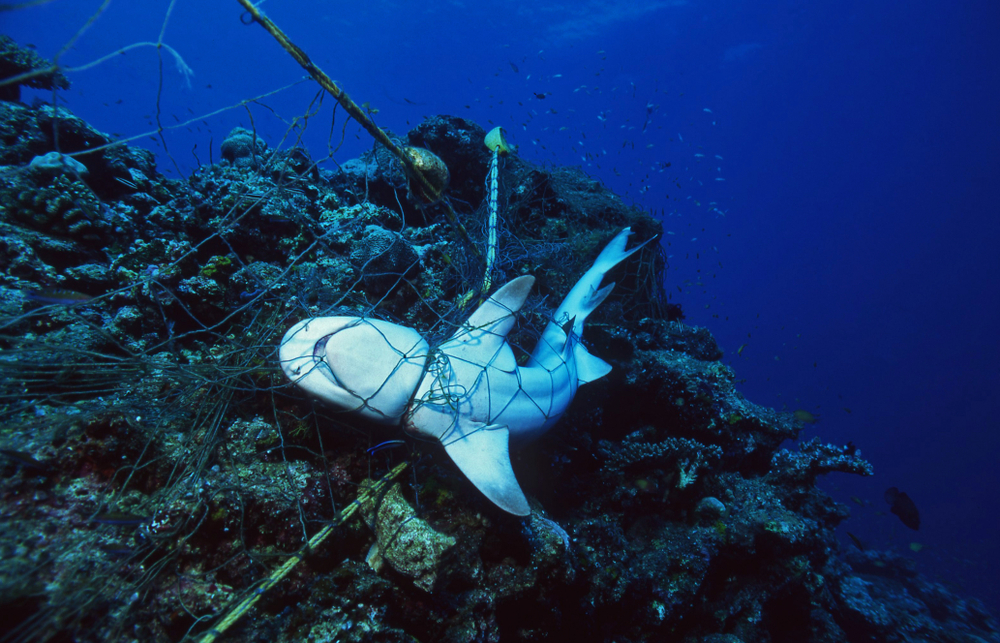
Traditional shark nets, often seen off the coasts of certain regions like Australia and South Africa, are a contentious method of deterring shark attacks. Their effectiveness is overshadowed by the significant ecological damage they cause. Here’s how they become lethal:
-
Mesh Size: The nets have a mesh size that ensnares not only targeted sharks but also other marine life.
-
Breathing: Sharks must keep swimming to pass water over their gills for respiration. Being trapped in nets halts their movement and effectively causes them to suffocate.
-
Stress: The struggle to free themselves inflicts fatal levels of stress upon ensnared sharks.
-
Predation: Once immobilized, sharks become easy prey for other predators.
-
Bycatch: The nets do not discriminate, often capturing rays, dolphins, and other large fish, leading to unintended ecological consequences.
An innovative SharkSafe barrier presents an alternative, using magnetic fields to deter sharks without the devastating bycatch associated with traditional nets.
Innovative Barriers Ensuring Safer Waters

The SharkSafe Barrier is an inventive technology designed to establish a secure zone for ocean activities such as surfing, swimming, and paddleboarding. Inspired by the natural deterring effects of kelp, the barrier mimics this underwater plant to prevent sharks from entering designated safe areas.
Incorporating magnetic technology, the barrier also leverages the shark’s sensitivity to electromagnetic fields, adding an additional layer of deterrence without causing harm to the marine life. While magnetic deterrents have met with some skepticism regarding their effectiveness, the technology aims to offer a more compassionate solution compared to traditional shark nets and culling programs which often result in the death of sharks and other marine creatures.
Experts believe such a barrier could significantly reduce the risk of shark bites, providing peace of mind to those enjoying the ocean. Though questions remain about its absolute effectiveness, even cautious optimism from researchers suggests that a well-designed barrier could maybe greatly diminish the already minimal risks posed by sharks in the wild.


Add comment