

Understanding the dynamics between these two species is key to appreciating how they influence their ecosystems. Research into their interaction reveals insights into the balance of aquatic ecosystems.
For instance, investigations into their behaviors and how they coexist can provide valuable information on the health and sustainability of the habitats they share, as otters have been known to frequent beaver ponds without necessarily altering the beaver’s handiwork.
Through studying these creatures, one gains a clearer picture of the complexities of wetland environments and the importance of each species within them.
Physical Characteristics

When distinguishing beavers and otters based on physical characteristics, one should primarily examine their bodies and tails, as well as size and weight variances. These animals exhibit starkly different appearances tailored to their respective lifestyles.
Body and Tail Differences
Beavers are known for their distinctively wide, flat tails, covered with scales and sparse hairs. This flat tail serves multiple purposes, from aiding in swimming to being used as a fat storage reserve. In contrast, otters have long, slender, and rounded tails, which are muscular and tapered to aid in propulsion and maneuverability in the water.
Beavers have a compact body with dense, waterproof fur, which is essential for their aquatic life. Their coats consist of two layers: a soft undercoat and coarser outer guard hairs. Otters also have a dual-layered coat, with the underfur being dense and soft, providing insulation, while the guard hairs are longer and waterproof.
Beavers possess large, orange incisors that continue to grow throughout their lives, enabling them to efficiently gnaw on wood to fell trees and build dams. On their hind feet, beavers have large, webbed feet which contribute to their swimming prowess. Otters, on the other hand, have sharp teeth for capturing fish and smaller webbing on their feet, maintaining agility and speed in the water.
Size and Weight Comparisons
The size and weight of beavers and otters can vary widely. Beavers typically reach a body length of 3 – 4 feet and weigh 35 – 70 pounds, making them the second-largest rodent in the world. Otters are generally smaller, with river otters averaging about 2 – 3 feet in body length and weighing between 11 – 30 pounds depending on their age, diet, and environment.
In general, the North American beaver exhibits a larger overall body size in comparison to the North American river otter. The surface area of beavers is smaller than expected, considering their body mass, leading to efficient heat retention.
Through these distinct physical attributes, both beavers and otters are well-adapted to their aquatic habitats, yet with different functionalities that reflect their ecological roles.
Habitat and Lifestyle
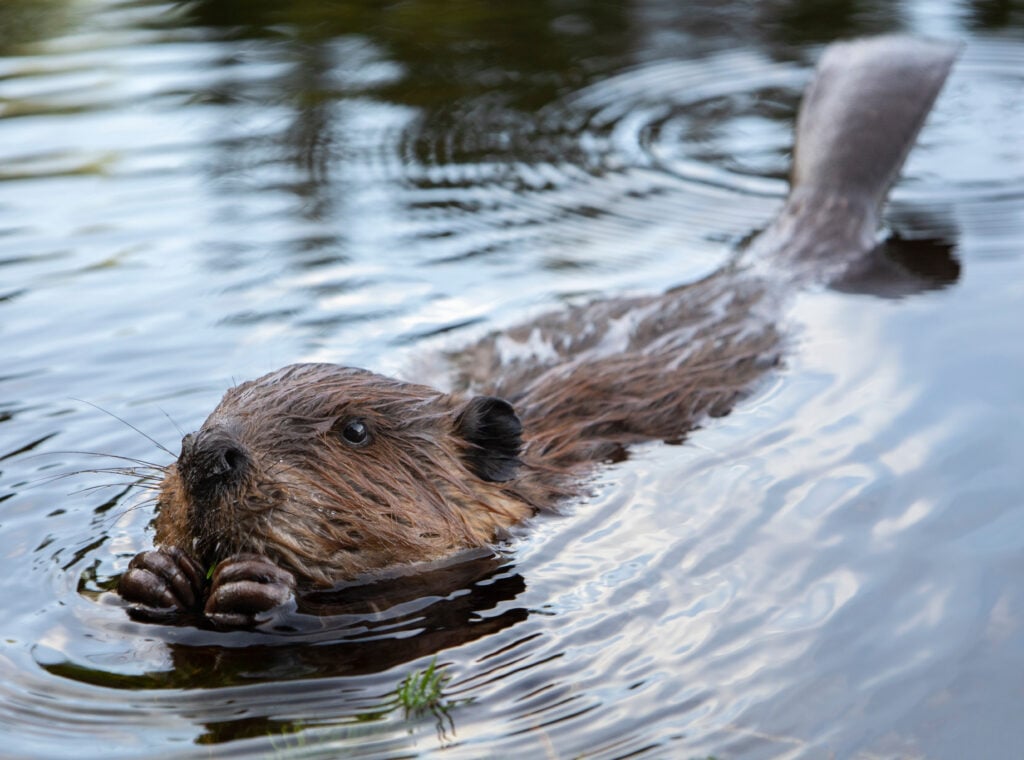
Beavers and otters are both adaptable, semi-aquatic mammals, but they have distinct habitat preferences and differing feeding habits that align with their unique lifestyles.
Habitat Preferences
Beavers are primarily known for their remarkable engineering skills, which they apply to create suitable habitats. They favor freshwater environments like rivers, lakes, ponds, and wetlands. An essential aspect of their habitat is the presence of trees and vegetation, as these materials are necessary for building dams and lodges. Their constructions can transform the landscape, creating new wetlands and modifying water flow. Beavers are largely vegetarian, relying on twigs, leaves, bark, and aquatic plants.
Otters, predominantly carnivorous, have diverse habitat requirements, frequenting both freshwater and coastal marine environments. River otters show a preference for areas near abundant prey, like rivers with enough water to support fish populations. Their homes are often simple dens alongside riverbanks, which they don’t modify to the extent beavers do. The diet of otters includes fish, crayfish, birds, and occasionally small rodents.
Diet and Feeding Habits
Beavers maintain a vegetarian diet. They primarily consume aquatic plants and the succulent greenery of herbaceous plants during the warm months, and switch to wooden material such as twigs and bark in the colder seasons. They have an adaptable palate suited to their surrounding vegetation and can drastically alter the environment to access food.
On the other side of the spectrum, river otters are skilled predators, with diet largely consisting of aquatic animals. Being carnivorous, they prefer fish as their main source of food, but they also eat a variety of aquatic life including crayfish, amphibians, and sometimes small mammals or birds. Their excellent swimming abilities make them adept at catching quick-moving prey in various aquatic settings.
Both species are integral parts of their respective ecosystems, with beavers acting as ecosystem engineers and otters as top predators in many freshwater habitats. While beavers affect the habitat structure, otters can control populations of their prey, underlining their importance to the health of aquatic and semi-aquatic environments.
Social Behavior and Reproduction

Both Eurasian beavers and river otters exhibit complex social behaviors and reproductive strategies, which are integral to their survival and ecological impact. Understanding their social structures and mating practices contributes to a comprehensive view of their behavior and reproduction.
Social Structures
Eurasian beavers are known for their monogamous relationships, forming stable pair bonds that can last for many years. These monogamous pairs manage and defend territories, which plays a crucial role in their social and ecological dynamics. Their social behavior is critical for successful habitat selection and reproductive success. In contrast, the social structure of river otters can be more variable, ranging from solitary individuals to social groups, often formed for cooperative hunting and enhanced protection.
Research on the Eurasian beaver suggests that aspects other than sex, such as territorial defense, affect habitat selection, highlighting their complex social environment. On the other hand, river otters exhibit a social nature, and their spatial distribution can depend on various factors, including the availability of fish species, which may affect the presence of social otters in certain habitats.
Mating Practices and Offspring
Beavers generally mate for life, with a mating season that occurs between January and March, during which a monogamous pair will produce a single litter of offspring annually. The gestation period for beavers is approximately 105 to 107 days, and the offspring, known as kits, are cared for by both parents within their lodges. This dedicated parental care is essential for the survival of the kits until they are independent.
In the case of river otters, the breeding season is less precisely defined, and they can display delayed implantation, where the fertilized egg can remain dormant before implanting and beginning development. This adaptation allows river otters to give birth when environmental conditions are optimal. River otters are less monogamous, and while they can form temporary breeding pairs, they do not form lifelong bonds as beavers do. Their more fluid social and mating systems result in a diversity of reproductive strategies.
With the social behavior and reproductive success of these species intricately linked to their survival, understanding their specific behaviors during mating season and the care of their offspring provides insights into their role in the ecosystem. This underscores the importance of ecological research on these species’ behavior and reproductive patterns.
Conservation Status and Human Impact

The conservation status of beavers and otters has been subject to considerable variation across North America, Canada, and Europe. Beavers, classified as rodents and known for their aquatic lifestyle, have experienced a historical decline due to overharvesting for their fur and castoreum.
River otters, distinguished by their reputation as adorable yet skilled predators, also faced similar threats. Hunting for their dense fur had once reduced otter populations significantly.
Human impact plays a dual role in the fate of these species. Negative impacts arise from habitat destruction, water pollution, and conflicts with agricultural and recreational interests. Conversely, proactive measures such as protection under the Endangered Species Act in the United States and the creation of wetland reserves across Canada and Europe have improved conditions for beavers and otters, promoting population recovery.
Both species have close ecological relationships with other aquatic and semi-aquatic creatures such as the muskrat, capybara, and mink. Field guides often highlight the importance of these mammals in maintaining healthy ecosystems, where, for instance, beaver activity can create wetlands that benefit a multitude of species.
In current conservation efforts, the emphasis lies on balancing human activities with the needs of these integral wildlife species, ensuring that beaver and otter populations thrive, contributing to the biodiversity and ecological health of their habitats.

Add comment