

Polar bears, also known as Ursus maritimus, are often viewed as majestic creatures of the Arctic region. As the largest land carnivores and expert hunters, these bears have a reputation for being both powerful and dangerous. While polar bears possess the physical capacity to pose a threat to humans, the actual frequency and severity of polar bear attacks merit further investigation.
Climate change has rapidly transformed the Arctic ecosystem, and its impact on polar bears cannot be understated. The reduction of the Arctic sea ice has led to significant challenges for polar bears as they depend on it for hunting and breeding. Consequently, the increasing scarcity of their primary food source, seals, may influence the behavior of polar bears and potentially increase their curiosity and interaction with humans.
Polar Bear Behavior and Habitat

Polar bears are majestic creatures that live primarily in the Arctic region. They have evolved a multitude of adaptations in order to survive in their harsh environment. One adaptation is their thick fur which provides insulation and effective camouflage in the snow. Polar bears also have a dense layer of blubber that helps them conserve energy and maintain the body’s core temperature.
These mammals are skilled swimmers, able to swim vast distances across the Arctic waters to search for food. Their powerful front limbs enable them to efficiently propel through the water, while their massive hind limbs comfortably tread on the land and ice.
Hunting and Diet
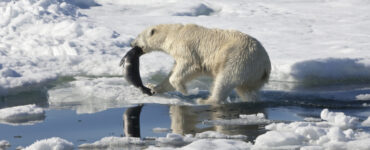
As the apex predators of the Arctic, polar bears primarily consume a carnivorous diet. They are known to specialize in hunting seals, often utilizing a patient and calculated approach. Polar bears have an exceptional sense of smell, which they use to locate breathing holes of seals beneath the ice. They may also feed on fish or scavenge the remains of whale carcasses washed ashore.
Polar bears are also known to adjust their food source according to its availability. Aside from seals, bears can feed on smaller mammals, birds, and even vegetation found in the Arctic.
Interaction with Humans
Interactions between humans and polar bears are not uncommon, especially in Arctic communities. As the bears venture onto human settlements or even onto waste disposal areas, conflicts may arise. In some cases, polar bears have been known to attack humans, primarily as a result of feeling threatened or being unable to find their natural prey.
Human-polar bear conflicts are increasing due to climate change and habitat loss. This has led to the dangerous situation where hungry and desperate polar bears approach human settlements in search of food. It is essential to take appropriate measures to prevent these conflicts and ensure the safety of both humans and the polar bear population.
It is worth mentioning that polar bear attacks on humans are still rare events. But, with climate change-related habitat destruction, experts predict that the frequency of such interactions may increase, impacting both human safety and the survival of these magnificent creatures.
Conservation and Human Impact

Ursus maritimus, commonly known as polar bears, are currently listed as a vulnerable species by the International Union for Conservation of Nature (IUCN). These apex predators are facing increasing threats primarily due to climate change and global warming, which result in the loss of Arctic sea ice. Melting sea ice is the prime concern since it reduces the polar bears’ natural range for hunting, mating, and traveling to far-off ice floes.
Polar bears can be found across the Arctic in countries like Greenland, Alaska, Canada, Russia, and Norway. Much of their livelihood relies on the availability and stability of sea ice. As the ice continues to melt and shrink, polar bears lose some of their essential habitat and may face difficulties finding food and mates.
Human Measures for Coexistence
With changing habitat and range, incidents of human-polar bear conflicts have increased over the years. Various organizations such as WWF and local communities have come up with ways to improve coexistence. One such measure is the establishment of polar bear patrols that help in monitoring and managing polar bear-human conflicts. These patrols work closely with scientists and conservationists to ensure that local communities remain safe and the polar bears’ needs are addressed.
In addition to the establishment of patrols, communities also invest in better waste management practices to reduce the chances of attracting polar bears to human settlements. By increasing awareness and adopting safe practices, locals can contribute towards the conservation efforts for this vulnerable species.
The collaborative efforts of IUCN, scientists, governments, and local communities play a crucial role in the conservation of polar bears and reducing the negative impacts of human activities on their survival.

Add comment