
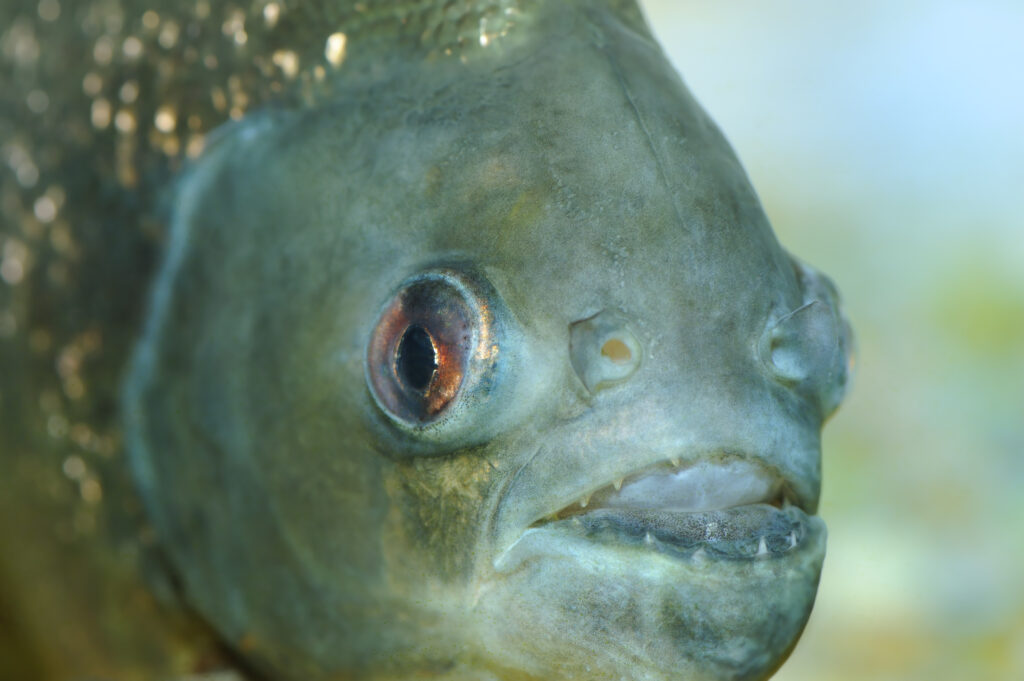
Piranhas have long been entrenched in popular culture as ferocious predators capable of stripping flesh from bone in a frenzied attack.
These freshwater fish, native to South American rivers, lakes, and streams, especially in the Amazon Basin, have been shrouded in a veil of notoriety that often eclipses the reality of their behavior and ecological role.
With various species thriving in diverse habitats across South America, including Brazil, the question of their danger to humans and other animals becomes a subject of intrigue and scientific investigation.
Table of Contents
Understanding Piranha Behavior

Piranhas are often misunderstood creatures with complex behaviors that are influenced by their habitat, diet, and social structures. By exploring these factors, one can gain insight into the true nature of these fish.
Piranha Habitat and Species Distribution
The piranha species, part of the subfamily Serrasalminae, are predominantly found in South American rivers, including the Amazon Basin. Distinct species such as the Pygocentrus nattereri (red-bellied piranha), Serrasalmus, and Black Piranha inhabit different regions, from rivers to lakes, adapting to specific ecological niches. The distribution includes a wide range of environments, which reflect the diversity in their species and feeding habits.
- Amazon River: Home to several piranha species, providing a complex ecosystem.
- Lakes: Sites for different species such as Catoprion and Pygopristis.
- Floodplains: Ecosystems where species like the wimple piranha thrive.
Diet and Feeding Patterns
Contrary to popular myth, piranhas are primarily omnivorous, partaking in a varied diet of seeds, plants, and fruit, along with crustaceans, insects, and other fish. While some species are inclined towards a carnivorous diet like the Serrasalmidae, their feeding patterns don’t always involve the so-called feeding frenzy. Instead, piranhas are opportunistic and may also function as scavengers, consuming remnants of dead animals.
- Carnivorous: Some species prefer a diet of live or dead fish and crustaceans.
- Omnivorous: Many consume a mix that includes plants, seeds, and insects.
- Feeding Frenzy: Less common than believed; usually triggered by extreme hunger or blood.
Social Structure and Shoaling
Social behavior and shoaling are significant aspects of piranha life. These fish often form shoals for protection against predators, enhanced foraging efficiency, and mating opportunities. The size and composition of a shoal can vary, but it is generally made up of smaller family groups that come together. Social interactions within the groups influence feeding, movement, and response to threats.
- Protection: Shoaling offers safety in numbers from piranhas’ natural predators.
- Foraging: A shoal can effectively locate and share food resources.
- Social Dynamics: Each shoal exhibits complex hierarchies and interaction patterns.
By examining these aspects, it becomes clear that the behavioral context of piranhas is far more nuanced than their aggressive reputation suggests. Their adaptation to different ecological niches, varied diet, and complex social structures all play a part in the daily life of these fascinating fish.
Piranha Interaction with Humans

Piranhas have been both feared and marveled at, largely due to their portrayal as voracious predators with razor-sharp teeth. Scientific studies and anecdotal evidence contribute to our understanding of how these freshwater fish behave when they encounter humans.
Piranha Attacks on Humans: Myth vs. Reality
Piranhas, indigenous to South American rivers such as the Amazon, have a reputation for ferocity in popular culture, often exaggerated by Hollywood films. Real-world incidents, however, paint a more nuanced picture. Studies indicate that piranha attacks on humans tend to be rare and usually occur when the fish are stressed or feel threatened. An analysis of incidents in Suriname showed a small number of bite injuries, suggesting that piranhas may be dangerous under specific circumstances, but they are not the relentless attackers often depicted.
Size and teeth: Adult piranhas can vary in size, but even larger species with their sharp teeth typically shy away from human interaction.
Historical anecdotes: Accounts like those by Theodore Roosevelt, who described piranhas as ferocious, have contributed to their fearsome image, but more recent scientific reports call for a reevaluation of these claims.
Safety and Precautions
While piranha bites are relatively uncommon, they can cause significant injuries. Therefore, certain safety measures are recommended when swimming in regions inhabited by piranhas.
- Avoiding Bites: Swimmers should avoid areas where fishing or other activities have led to increased piranha activity.
- Understanding Behavior: Recognizing that piranhas are more likely to attack when isolated or when their nesting sites are disturbed can help in minimizing risk.
- Legal Measures: In some places, piranhas are classified as aquarium fish and may be kept as pets, but many regions have legal restrictions due to the potential risks involved.
Research and Conservation Efforts
Scientists focus on studying piranha behavior and their ecological role as both predators and prey. Conservation efforts are essential to sustain piranha populations, which face threats from overfishing and habitat destruction.
Classification and Population Studies: Proper classification helps in understanding piranha behavior and in implementing conservation programs. Ongoing research efforts also examine their population dynamics in their natural habitats.
Protective Legislation: Authorities may enact protective legislation to prevent the extinction of piranha species, maintaining the balance within their ecosystems. Studies highlight the importance of these fish in their native rivers and the need for legal protections.
Add comment