
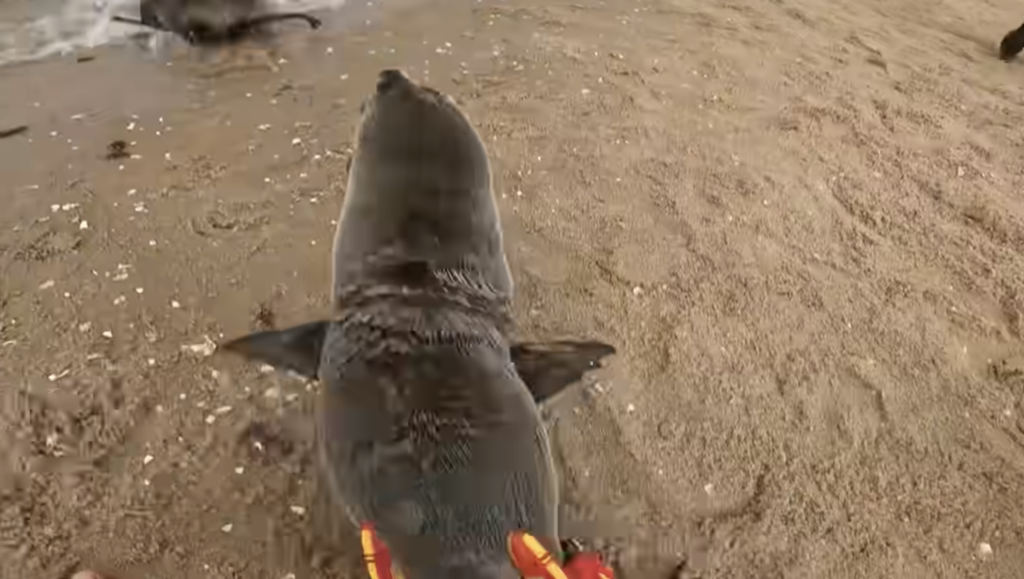
Amidst the vast expanse of the ocean, most entangled marine life never crosses paths with a human observer. The few we encounter tell a tale of survival and resilience. One such story unfolds as a team works tirelessly, navigating the cluttered waters. They employ a variety of tools and sheer human determination to rescue animals trapped in the deadly snare of marine debris. Their efforts, a race against time, are punctuated by moments of success, as one by one, the creatures are freed from the grips of discarded nets, ropes, and rubber remnants.
The intervention is critical, precise, and can sometimes be chaotic, reflecting a microcosm of the larger environmental challenges these marine animals face. The team’s quick thinking leads to the invention of ad-hoc practices on-site, maneuvering through a landscape where even the slightest miscue can mean the difference between life and death. The struggle is palpable, but each successful release back into the wild rekindles hope and underscores the importance of their mission. The narrative is one of courage, compassion, and the continuous push to restore harmony to an ecosystem under siege.
Key Takeaways
- A dedicated team actively rescues entangled marine animals from ocean debris using various tools and quick thinking.
- Each successful intervention reflects the broader environmental challenges and the urgent need for such rescue efforts.
- The story underscores the importance of addressing marine debris to preserve oceanic ecosystems and the wildlife within.
Gear Arrangement and Implementation
Equipping oneself properly is paramount when setting out for a task as delicate as untangling marine animals. The gear required for such an endeavor includes a variety of nets, such as a baby net for smaller creatures and a green fishing net for larger catches. Handy accessories like a rubber gasket—potentially sourced from a discarded glove—and an elastic band from a gumboot are also used to handle the operation smoothly.
During the procedure, it’s crucial to have a vigilant teammate, much like Tony, who can assist by hand when needed. Occasionally, unique items like a piece of blue rope, likely originating from vegetable bags, become part of the necessary tools. For more intricate situations, an improvised device derived from a snoek line with a sizable hook may be required.
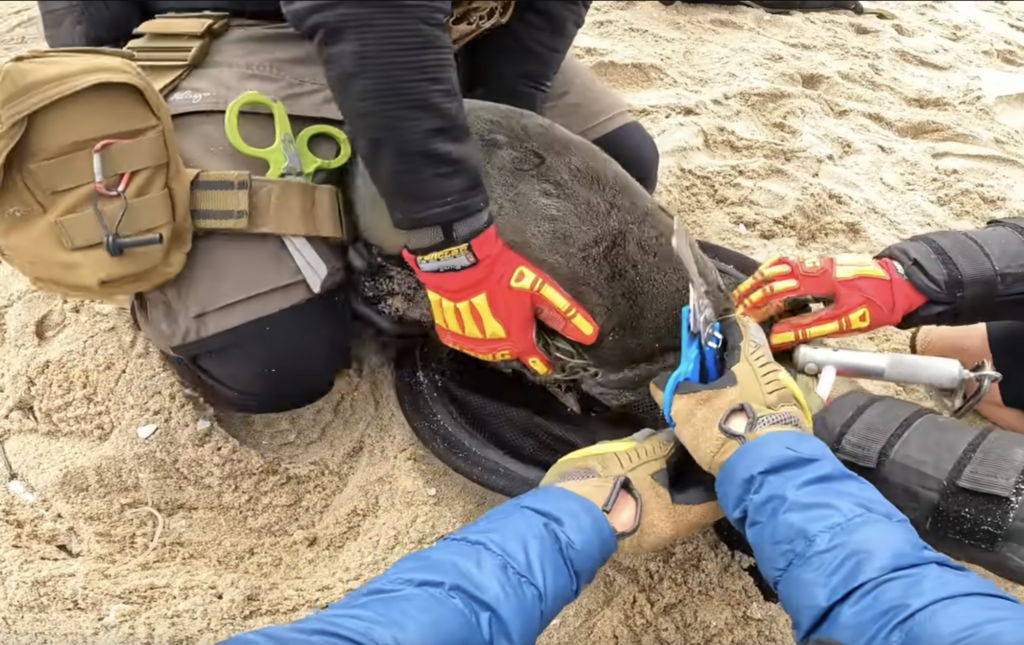
As incidents unfold rapidly, such as discovering a black strap or a cut segment of a trawler net, one must remain alert and responsive. The materials repurposed for these rescues also include a thin line, effectively an old fishing line, and sometimes an industrial-grade boot cuff. These reutilized elements showcase the adaptability needed in the field.
Additionally, miscellaneous debris like plastic packaging often becomes entangled with marine fauna and must be delicately removed. Maintaining a well-stocked and efficient toolkit and a calm, supportive team environment is crucial, allowing for quick breath-catching moments and ensuring the safe release of animals back into the wild.
Early Observations and Rescue Actions
Witnessing the struggle firsthand, the team leaped into action when they spotted an animal in distress. The urgency was palpable as they coordinated the rescue efforts, summarized as follows:
- The initial observation included a visual on one animal, prompting an immediate response with the necessary equipment.
- One team member, Wally, promptly provided a baby-sized net for the operation.
- The team halted their boat and prepared to assist another animal located behind them.
- Spotting was crucial; as a member shouted the presence of another animal, teamwork ensured they were ready to help with a variety of tools, such as a snoek line for capture.
- Coordination and communication were key, with shouts guiding rescuers to animals in various directions, such as “on the ridge” or “to your right.”
- Catching and safely releasing the entangled animals involved delicate handling and on-the-spot problem-solving.
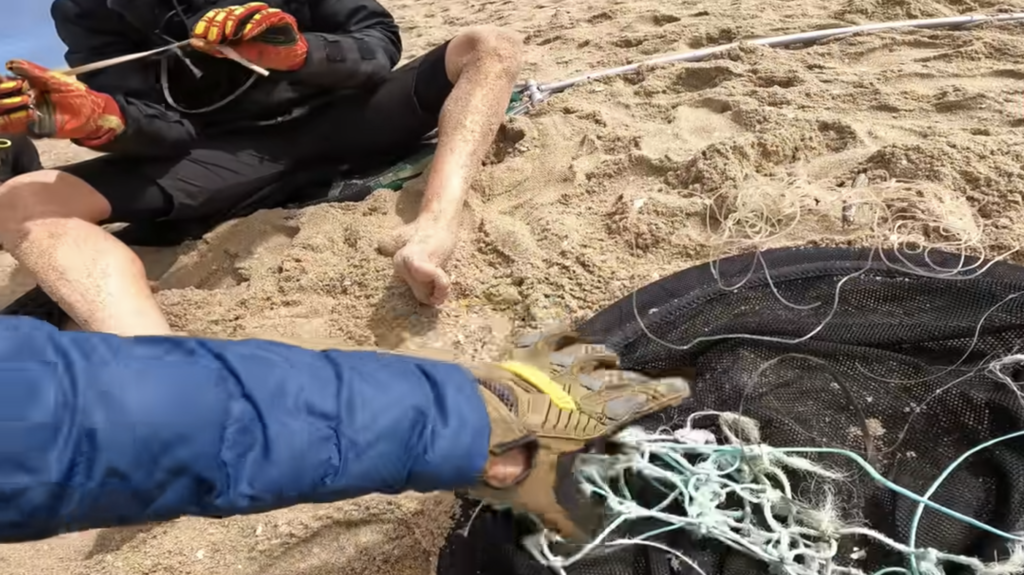
- Items causing entanglement included an elastic from a gumboot, a black strap, a green fishing net, and what appeared to be a rubber gasket, possibly from a glove.
- One creature was particularly large and had been hindered by a blue rope, impacting its ability to move swiftly, which was identified as part of a vegetable bag.
- The rescuers also discovered various types of discarded fishing gear, such as aged trawler nets, thin lines, and snoek lines with large hooks.
- Amidst the chaos, the rescuers had to maintain their focus as they assessed and removed plastic packaging and other debris from the animals.
- The effort was communal, with one notable moment where an animal’s companion appeared to be assisting in the rescue.
- After a demanding series of rescues totaling seven animals, the team took a moment to regroup and analyze the success of the operation, recognizing less than 10% of entanglements are typically reported.
- The process involved not only physical rescue but also identifying and assessing the variety of debris that had ensnared the marine life.
The collaborative and quick-witted approach of the team underscored a successful endeavor against the odds, characterized by a series of rapid assessments and immediate rescues.
Recognizing and Managing Ocean Waste
Marine waste, largely consisting of various discarded items, can have detrimental effects on marine life. Teams dedicated to the conservation of ocean fauna often engage in the retrieval and disposal of such debris to protect the ecosystem. A common find in these operations is a tangled mass of old fishing nets, often possessing a multitude of cuts and entangled in marine fauna. Aggressive lines from trawler nets and the very thin, almost invisible lines from snoek fishing are typical culprits in trapping unsuspecting sea life.
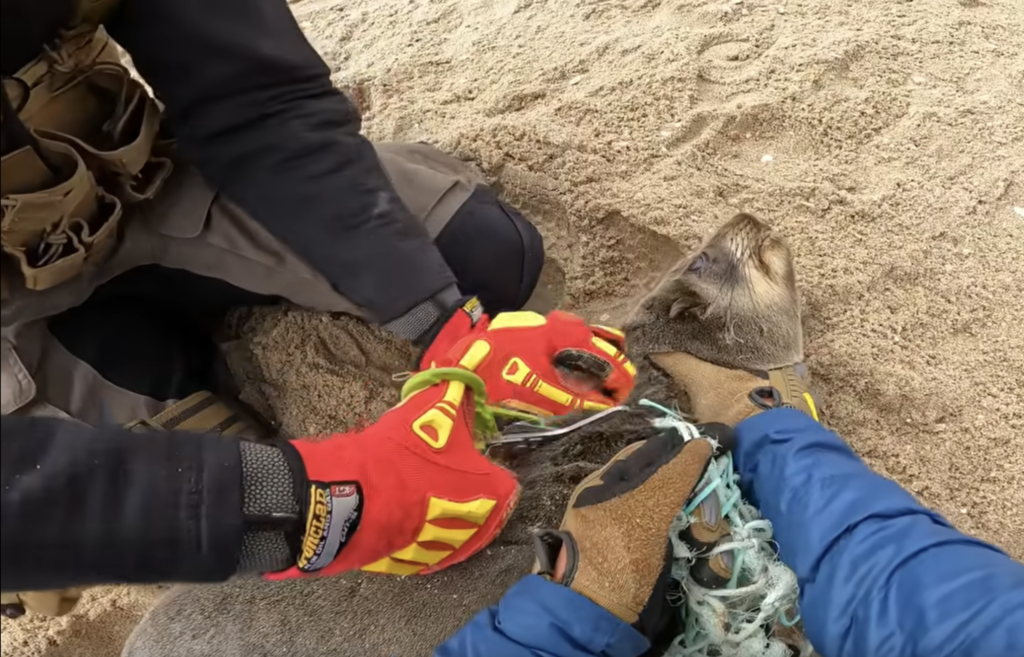
During clean-up activities, the material composition of waste can vary significantly. One might encounter an assortment of objects ranging from green fishing nets, elastic materials potentially from footwear, to rubber o-rings and black straps that could originate from industrial equipment. It is also not uncommon to find ropes, particularly blue ones, which appear to be from vegetable bags, or pieces of thick plastic that resemble plastic packaging or parts of heavy-duty gloves.
Those involved in these endeavors use various techniques to free the animals. In many cases, they carefully cut away the entangled nets or lines, often finding additional hidden segments that need to be removed. Success in these rescue efforts is sometimes marked by small, otherwise inconspicuous tags attached to the debris which, when active, indicate the animal’s use of its limbs.
The effectiveness of such rescue and clean-up operations is noteworthy. Despite the fact that less than 10% of all marine animal entanglements are observed and reported, every successful intervention represents a significant victory. Collaborative efforts and keen observation skills are essential, as evidenced by situations where one animal’s entanglement is obscured by another, or where entangled animals are assisted by their companions.
This collective approach, characterized by a shared concern for marine life, highlights the impact that human intervention can have on reducing harm caused by marine debris. The teams work not only to disentangle and release the individuals caught in the debris but also to collect and properly dispose of the waste, minimizing the possibility of future entanglements.
Returning Animals to Their Natural Habitat
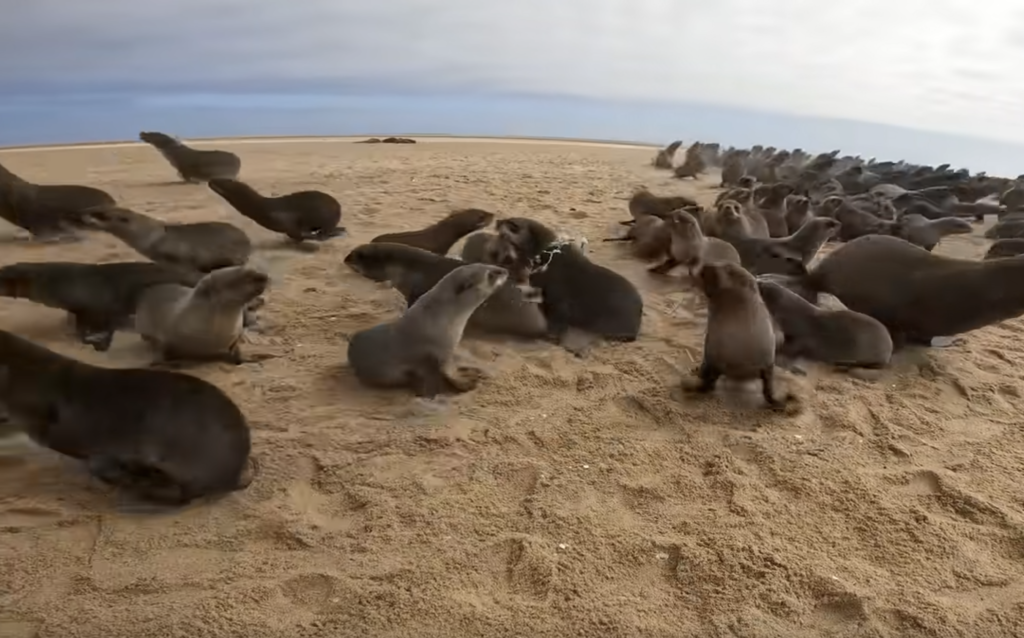
During a recent rescue operation, the team encountered a series of entangled marine creatures. With concerted efforts, the group freed these animals from various debris. They handed over a small net to Wally, kept a close watch on Naude at the back, and devised a strategy to maneuver behind an animal spotted on a ridge.
In the midst of the action, more animals in distress surfaced—one entangled in a snoek line and another trapped by green fishing netting. Team members signaled to handle some rescues by hand, working together to disentangle the creatures and return them to the ocean.
Point-by-point, the team documented the types of debris and its impact:
- A baby animal was ensnared with elastic material likely from a boot and a black strap.
- Another creature was bound in what appeared to be a section of a rubber gasket or o-ring, possibly originating from a heavy-duty glove.
- In one instance, the team discovered an encumbered creature with a metallic piece amidst seashells, which upon close examination turned out to be multi-cut marine debris.
- The rescuers identified a tag on another animal, hinting at prior encounters with human activities.
- A significant rescue included an animal with a blue rope attached, revealing the severity of the wound caused by entanglement in what was believed to be a part of a vegetable bag.
- Plastic packaging, remnants of old fishing gear like a trawler net, and a boot cuff were among the other dangerous litter removed.
After ensuring no injuries were overlooked, the team successfully released multiple animals back to their habitat, including one that was noticeably slower due to its injuries.
Throughout this chaotic yet rewarding process, the team was driven by a common purpose: to unshackle these creatures from the peril of marine debris and grant them freedom. Notably, less than ten percent of animal entanglements are spotted and recorded, highlighting the importance of such rescue missions.
Assessment and Strategy
During the undertaking of marine conservation activities, a variety of entangled marine life was encountered and promptly attended to. A strategy was promptly deployed for the safe release of each creature, with the team employing a blend of hands-on and tool-assisted techniques.
Encountered Marine Debris:
- Fishing Lines: Multiple instances of marine creatures tangled in lines, including a fine snoek line with a sizeable hook.
- Nets: Different types, such as a baby-sized net and an old trawler net, were removed.
- Assorted Items:
- Elastic material resembling that of a gumboot.
- A black strap, potentially from heavy-duty gloves.
- O-ring segments, likely from discarded equipment.
- Blue rope linked to vegetable bags.
- Plastic Waste: Varied pieces, like packaging and elements resembling a boot cuff, were found.
Rescue Actions:
- Identification: Spotting entangled wildlife across terrains, such as ridges, and differentiating between rubbish and live organisms.
- Detanglement Technique:
- Using bare hands where feasible to gently free the animals.
- Cutting through entanglements when necessary.
- Tagging and Inspection:
- Critical examination of the animals for hidden injuries or embedded tags.
- Noting any abnormalities, like cuts, possibly impairing movement.
Observations:
- One creature displayed an ability to evade capture due to a relatively minor entanglement.
- Certain animals appeared to guard or support their ensnared counterparts.
- Debris movement was noted, with some detritus adjusting position due to the animals’ natural movements.
After a surge of effort, acknowledged by the team’s expressions of surprise and relief, the rescuers took a moment to recollect. The recurrent appearance of blue rope—connected to vegetable packaging—alongside plastic waste brought attention to the indirect ways consumer goods can affect marine life. Remarkably, less than a tenth of such entanglements are believed to become known to authorities or receive intervention, highlighting the importance of hands-on conservation missions such as these.
Ongoing Rescue Efforts
While examining the effects of marine litter on aquatic wildlife, continued endeavors to rescue entangled marine animals are being made. It was noted that less than 10% of cases where animals are ensnared in marine debris are actually observed and reported, highlighting the need for increased efforts in this area.
Rescue operations recently involved the successful release of various marine creatures caught in an array of debris including:
- Fishing Gear: Pieces of green fishing nets and thin lines, some possibly originating from vegetable bags, were removed.
- Household Items: Odd remnants like an elastic likely from a boot and a black strap were extracted.
- Industrial Materials: Bits of what seemed to be industrial gloves, specifically the rubber gasket found typically at the opening, were found entangling some of the marine life.
Throughout these missions, teamwork was evident, with one instance of a sea creature being saved thanks to a prompt warning, leading to the disentanglement of a piece of blue rope that was constricting movement. The approach taken was cautious and methodical, ensuring that even as rescues were conducted swiftly, careful checks were made for additional, less visible injuries or embedded debris, including minute fragments of nets and thin lines.
The rescue operations did not always go smoothly, with chaotic moments as multiple animals were found entangled simultaneously, necessitating swift action and coordination. Evidence of previous entanglements was also noted, with scarring from past debris.
The process involved painstaking work to undo the various entanglements, using techniques that ranged from employing specialized tools for removing tightly wound materials to manual removal when feasible. Each case was addressed with the goal of minimal stress to the animal, consistently striving for the safe return of these creatures to their natural habitat.
Reflecting on Recent Events
Amidst excitement and haste, the team encountered their first case—a tangle of debris ensnaring an unfortunate sea creature. The entrapment was formidable, but through a cooperative effort guided by Wally’s instruction, the team focused on the task at hand.
Key Moments:
- Encounter with the first tangled marine animal obstructed by a net presumed to be from a baby’s play area
- Navigating through an intricate snarl of fishing lines, with one found closely resembling a snoek fishing line
- Tony’s crucial involvement in the rescue, guided by shouts of direction, leading to the discovery of a green fishing net
- Successful release of the ensnared creature, a rewarding moment marked by the removal of an elastic band—likely from a boot—and a black strap
Extracted Debris:
- A perplexing rubber gasket that might have originated from a discarded glove
- Detection of a metallic object hidden under seashells, later revealed to be a twisted piece of metal with multiple cuts
- Careful extraction of a blue rope and thin line, drawing a connection to typical materials used in vegetable packaging
- Removal of a snoek line with a large hook, signifying the dangers posed by abandoned fishing gear
- Final discovery and extraction of a black boot cuff or a similar item, a testament to the diversity of marine litter
The process was not without its challenges, as the team encountered several pieces of debris entangled in multiple layers. They tackled a thick trawler net, a testament to the perseverance required in these urgent situations. Amidst the clamor, a touching moment unfolded when one of the animal’s companions was seen trying to aid in the untangling effort.
The team’s efforts were relentless, as they continuously found entangled creatures, each with its unique predicament. In one instance, they discovered a creature hindered by a sizeable, visible gash caused by a tag that shifted with every movement. The rescue was tactful, allowing them to secure the animal and remove the offending tag.
Post-rescue, the team often paused to regain their composure, reflecting on the intensity of their endeavors. Kat’s efficiency was notable during these hectic moments, gracefully navigating through the chaos to aid each marine victim. This brief respite also offered a moment of realization: witnessing only a tiny fraction of such entanglements paints a stark picture of the larger issue at hand.


Add comment