
Great white sharks have long dominated the public’s perception of the ocean’s most formidable predators, but these famous apex predators are not the only creatures to be wary of in the marine ecosystem.
Other species, although less celebrated in media and folklore, possess traits and behaviors that can be equally or even more imposing.
Scientific reports suggest that the diversity of sharks is much more complex, hosting a variety of species with distinct characteristics that render them fascinating and sometimes more fearsome to humans and their aquatic neighbors alike.
The Apex Predators Beyond Great Whites

While the great white shark captures much public attention and fear, other apex predators in the ocean exhibit equally formidable traits. Some of these creatures outsize, outsmart, or even outlast the notorious great white.
Killer Whales: The Orcas’ Reign
Orcas, also known as killer whales, are highly intelligent and coordinated hunters. Marine ecologists recognize them as some of the most powerful predators in the ocean. Often hunting in pods, these whales utilize complex strategies to capture prey that can include sharks.
The Elusive and Massive Whale Shark
Contrasting in predatory behavior, the whale shark is a gentle giant. As the largest fish in the ocean, this filter feeder is notable for its immense size rather than its ferocity. Yet, its presence in marine ecosystems is as significant as any predatory apex predator due to its role in maintaining the ocean’s health.
Prehistoric Terror: The Megalodon Legacy
The thought of the extinct Megalodon continues to evoke awe and terror. This prehistoric shark dwarfed the great white, and evidence suggests it exhibited formidable predatory behavior. The legacy of the Megalodon sets a chilling precedent for what apex predators are capable of, although its reign ended millions of years ago.
Interactions and Dynamics in the Marine Food Chain

In the marine food chain, the dynamics between predator and prey are complex and critical for the health of ocean ecosystems. Predatory interactions, particularly involving top predators such as orcas and great white sharks, shape the behaviour and population dynamics of species like elephant seals and sea lions.
Foraging Pressure and Predator Impact
Great white sharks exert significant foraging pressure on populations of marine mammals, including elephant seals and sea lions. They are strategic hunters, often targeting young or weak individuals which can alter the prey populations’ genetic health and behaviour.
The impact of predation by great whites demonstrates the crucial role of apex predators in maintaining the balance within marine food chains.
Shark and Orca Encounters
Orca encounters with great white sharks can lead to dramatic shifts in local ecosystems. Orcas, also known as killer whales, are sometimes known to target great whites, specifically aiming for the liver, a nutrient-rich organ.
These interactions can lead great whites to exit an area en masse, creating an effect known as “ecological evacuation.” This demonstrates the influence of interspecies interactions on the structure and dynamics of the marine food chain.
Conservation Concerns: Overfishing and Pollution
Human activities such as overfishing and pollution disrupt the balance of marine food chains, causing cascading effects. Overfishing depletes key species, altering predation patterns and reducing food availability for predators like sharks and orcas.
Pollution can lead to habitat degradation, further distressing the ocean‘s complex food webs. Protection of these ecosystems is crucial, as the disruption of the marine food chain has profound implications on biodiversity and species survival.
Understanding Shark Behavior and Senses
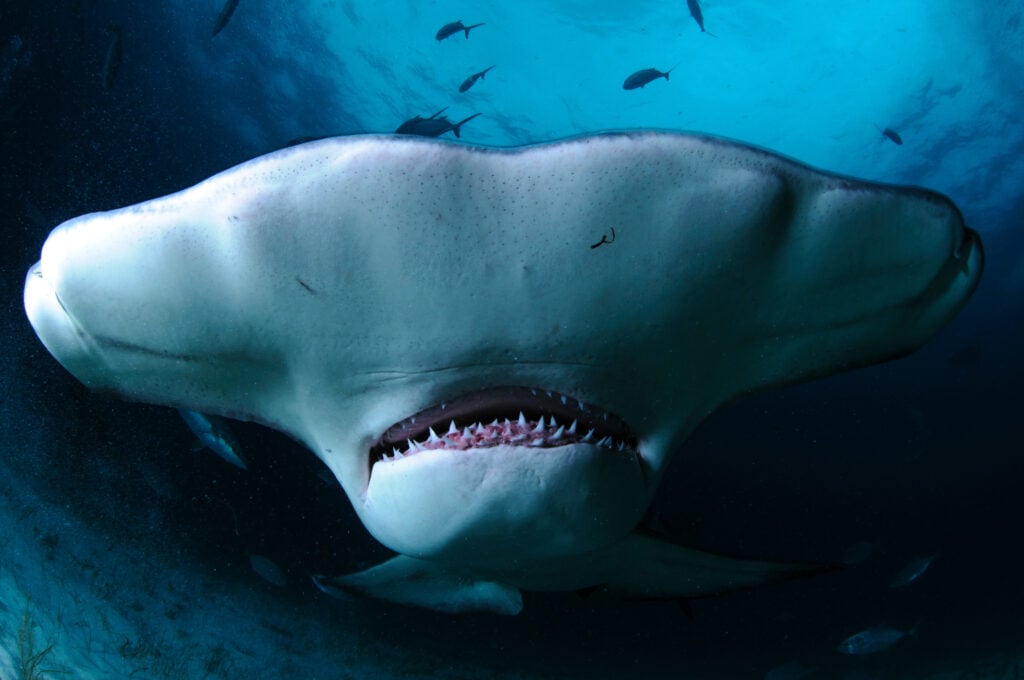
Sharks are often perceived as apex predators with a range of specialized behaviors and senses that allow them to effectively locate and capture prey. This section delves into the predatory strategies and the keen senses that have positioned sharks as formidable hunters in the marine ecosystem.
The Hunt: Strategies and Techniques
Sharks employ varied hunting techniques based on their species and the type of prey they target. One common strategy is the surprise attack, where sharks leverage their camouflage and speed to overtake prey unexpectedly.
The Great White Shark, for example, often attacks from below at great speeds, delivering a powerful bite force aimed at incapacitating their prey swiftly. Some species also use cooperative hunting tactics where they work in groups to herd fish or isolate weaker animals.
Shark Senses: How They Perceive Their World
Key to a shark’s ability to hunt is its array of senses, which are some of the most sophisticated in the animal kingdom. A shark’s sense of smell is incredibly acute, allowing them to detect a single drop of blood in an expanse of water.
Their sight varies among species but generally adapts well to the underwater environment, with some able to see in low light conditions. In addition, sharks are equipped with a lateral line system, an organ that detects vibrations and movement in the water, offering a sense of touch that helps in navigating murky waters and locating potential prey.
Another unique sense is the sharks’ ability to detect electrical fields produced by other organisms through their ampullae of Lorenzini, aiding them greatly in predation even when visibility is poor. This combination of intelligence and specialized senses makes sharks highly successful predators, often top-tier within their respective habitats.
Human and Shark Encounters: Myths and Realities

Misconceptions about sharks have been perpetuated by media, while statistics tell a different story about human-shark interactions. Education and conservation efforts remain vital for promoting a harmonious coexistence between humans and sharks.
The Impact of Jaws and Media Representation
The film Jaws significantly shaped public perception of the great white shark (Carcharodon carcharias), often demonizing these creatures as manhunters. Researchers like Salvador Jorgensen of the Greater Farallones National Marine Sanctuary have noted that sensationalized media portrayals contribute to the fear and myths surrounding sharks.
The reality is that sharks, including those found off the coasts of California, South Africa, and Australia, generally do not target humans; interactions are rare and often cases of mistaken identity.
Shark Attacks: Statistics and Survivor Stories
Shark attacks are rare occurrences, with more people being injured by fireworks than by sharks each year. The African Journal of Marine Science provides insights into attacks, indicating that while sharks can be aggressive, most encounters do not result in human injury or fatality.
Survivor stories often highlight how little understood these animals are, and the role that factors like cage diving or proximity to Cape fur seal colonies can play in human-shark incidents.
Promoting Coexistence: Education and Conservation Efforts
Marine scientists advocate for more effective solutions than nets to prevent shark attacks due to concerns over wildlife and potential shark extinction. They stress the need for education regarding the true nature of sharks, conservation efforts, and responsible tourism practices like cage diving.
Through better understanding, humans can learn to share the environment with sharks, ensuring the health of marine ecosystems around the globe.




Add comment