

Alabama is known for its diverse ecosystems and wildlife, and among its inhabitants, the American alligator stands out as a notable reptile within the state’s waterways. Commonly found in the southern United States, alligators are a prevalent presence in the rivers, lakes, and marshes of Alabama. These creatures are often spotted in the Mobile-Tensaw River Delta, a rich estuary near the Gulf of Mexico, which acts as a prime habitat for a plethora of species including the striped bass and the largemouth bass. Notably, alligators in Alabama are observed in substantial numbers within bodies of water like the Tombigbee and Alabama Rivers.
With a population that has rebounded since the species was once listed as endangered, the American alligator plays a significant role in the balance of Alabama’s aquatic ecosystems. Alligator sightings are common, potentially stirring interest or concern among residents and visitors engaged in outdoor activities like fishing or exploring the diverse wetland habitats. Although perceived as dangerous creatures, alligators contribute to keeping their habitats healthy. The Alabama Department of Conservation and Natural Resources actively manages the alligator population, ensuring that human-alligator encounters remain rare and that the ecosystems remain robust, balancing respect for wildlife with safety for those who venture near the state’s myriad of river systems.
Yellow River

The American alligator is indigenous to the United States, predominantly inhabiting water bodies across the Southeast. The Yellow River, flowing for 118 miles through Alabama and Florida, is a prime example of such habitats. Known by earlier names such as the Chester or Middle River, it makes its way into Blackwater Bay near Pensacola Bay. Given its natural ecological corridor connecting southern swamplands, the river is noted for frequent alligator encounters.
Sepulga River

Flowing through Alabama, the Sepulga River spans a distance of approximately 61.5 miles. Its course concludes where it empties into the Conecuh River near the Conecuh National Forest. This region is characterized by swampy wetlands which provide an ideal habitat for alligators, a species that thrives in freshwater environments.
The proximity to swamps makes the Sepulga River especially conducive to the needs of alligators, who have a limited tolerance for saltwater and are commonly found in such freshwater systems.
Perdido River

The Perdido River, spanning a modest 65.4 miles in length, weaves its path through the states of Alabama and Florida before culminating its journey in the Gulf of Mexico. The river’s name, derived from the Spanish word for “lost,” underscores its historical significance as a demarcation for various ruling nations—namely the United States, France, Spain, and Great Britain. Presently, this waterway also demarcates the boundary between Alabama and Florida.
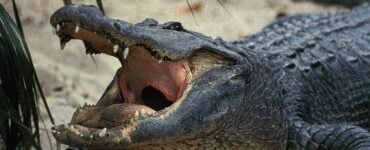
The marshy landscape flanking the Perdido River provides an ideal habitat for the American alligator, scientifically termed Alligator mississippiensis. These formidable creatures are adept carnivores, known to reach astounding lengths of up to 15 feet and weigh in the vicinity of 1,000 pounds. A typical alligator may witness many decades, generally surviving between 35 to 50 years in wild conditions. When these reptiles congregate, they are intriguingly referred to as a “congregation.” Observations of these alligators along the Perdido are frequent, a testament to the river’s lush, wildlife-rich environment.
The Waterways of Conecuh and Escambia

The body of water known as the Conecuh in its upper stretches transitions to the Escambia River as it nears and crosses into Florida, ultimately culminating in Escambia Bay and the Gulf of Mexico. With an impressive length of 258 miles, this river is the seventh longest in Alabama, starting its journey near Union Springs, AL. As it meanders for 198 miles toward Florida, the environment teems with life, including a significant population of alligators, particularly as the river approaches the Mobile-Tensaw River Delta in the Escambia segment.
Situated along its path, the Conecuh National Forest provides a natural sanctuary surrounding part of the river’s course through Alabama. This natural corridor plays host to diverse ecosystems and serves as a critical habitat for innumerable species.




Add comment