
Sturgeon are an ancient species of fish belonging to the Acipenseridae family, with their fossils dating back to the Late Cretaceous period. There are 27 different species of sturgeon found around the world, and they are known for their large size, often reaching lengths of 2-3 meters or more.

For those interested in the longevity of sturgeon, it is worth noting that their lifespan varies depending on their geographic location. Atlantic sturgeon living in colder northern regions have been found to live up to 60 years, while southern populations generally have a shorter lifespan of around 25 to 30 years.
Lake sturgeon, another species of this ancient fish, can live on average between 50 and 80 years, with females typically outliving males.
These remarkable lifespans make sturgeon one of the oldest living fish species, allowing them to play an essential role in their ecosystems and serving as a key subject of interest for researchers and conservationists alike.
Sturgeon Overview

Biology
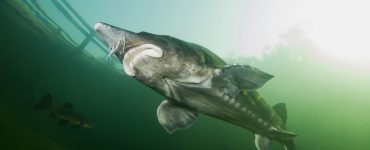
Sturgeons are long-lived, late-maturing fish that exhibit distinctive characteristics. They possess a heterocercal caudal fin, similar to sharks, and an elongated, spindle-like body. Sturgeons are smooth-skinned, scaleless, and have five lateral rows of bony plates called scutes.
Atlantic sturgeons exhibit variation in lifespan depending on the geographical location. For example, they live up to 60 years in Canada, while in the Southeast, they have a lifespan of 25 to 30 years. Southern populations typically grow faster and reach sexual maturity earlier than their northern counterparts.
Shortnose sturgeons also have a correlated lifespan depending on their habitats. In Canada, they can live up to 60 years, while in the Southeast, their lifespan ranges from 10 to 20 years. Similar to Atlantic sturgeons, southern shortnose sturgeon populations tend to grow faster and reach sexual maturity earlier compared to other populations.
Habitat
Sturgeons can be found in various habitats across the world. The common Old World sturgeon (Acipenser sturio) inhabits the waters from Scandinavia to the Mediterranean. Some species of sturgeon, such as the lake sturgeon, also known as the rock sturgeon, are mainly found in North America.

Sturgeons typically inhabit areas with slow currents, sandy or gravel bottoms, and prefer water depths between 10 and 30 feet. They often migrate between freshwater and saltwater environments, which allows for a diverse range of habitats and breeding grounds. Sturgeons may attain great sizes, with lengths of 2-3 meters (7-10 feet) being common in some species. Occasionally, specimens reaching up to 8 meters (26.2 feet) long have been observed, although these instances are rare.
Sturgeon Lifespan
Sturgeons, belonging to the family Acipenseridae, have a varied lifespan depending on multiple factors. Some sturgeons can live up to 60 years, while others may only live 10 to 20 years. This section will discuss the factors affecting their lifespan and the methods used to determine their age.
Factors Affecting Lifespan
Geographical location plays a significant role in determining the lifespan of sturgeons. The farther north or south the sturgeon lives, the more likely its lifespan will differ. Northern populations generally have longer lifespans, with some sturgeons living up to 60 years in Canada. In contrast, southern populations, such as those in the Southeast, typically have shorter lifespans, ranging from 10 to 20 years.
Another factor influencing sturgeon lifespan is the rate of growth and sexual maturity. Southern populations tend to grow faster and reach sexual maturity earlier than their northern counterparts, which may contribute to the difference in lifespans between these populations.
Age Determination Methods
There are several methods used for determining the age of sturgeons, including the analysis of hard body parts, such as scales, fin rays, and otoliths. These body parts display growth patterns similar to tree rings, allowing scientists to estimate the age of the fish.
Additionally, mark-recapture techniques can be employed to track the growth and survival of individual sturgeons in a population over time. This involves tagging and recapturing a sample of fish, then comparing the size and condition of these fish upon recapture to their initial measurements.
Sturgeon Species
Sturgeon are fascinating fish with several species exhibiting unique characteristics and life spans. In this section, we will explore the variations in lifespan among different sturgeon species by discussing notable long-lived species and lesser-known ones.
Notable Long-Lived Species
Atlantic sturgeon (Acipenser oxyrinchus) are known for their impressive life spans, with their longevity being correlated to their geographic location. In northern areas such as Canada, they are known to live up to 60 years, while their counterparts in the Southeast tend to have shorter lives, usually around 25 to 30 years. This is due to the fact that southern populations typically grow faster and reach sexual maturity earlier than northern populations.
Lake sturgeon (Acipenser fulvescens), also known as rock sturgeon, are massive, slow-growing fish that can reach impressive lengths of up to 22 feet and weigh between 200 and 1,800 pounds. These impressive fish have a life span that ranges from 50 to 60 years.
Lesser-Known Species
Some lesser-known sturgeon species also exhibit noteworthy life spans. For instance, the common Old World sturgeon (Acipenser sturio) occurs in areas from Scandinavia to the Mediterranean, and although their specific lifespans are not well-documented, they are known for their potential to grow exceptionally large, with specimens reaching lengths of over 26 feet.
Many of the 27 species of sturgeon worldwide share similar characteristics, such as scaleless and smooth skin, as well as a distinctive heterocercal caudal fin similar to that of sharks. Despite the unique features of each species, sturgeons as a whole are renowned for their long life spans and slow growth rates, making them a truly remarkable group of fish.
Sturgeon Conservation and Management
Sturgeons are long-lived fish, with some species living up to 150 years. However, their populations face various threats that need to be addressed through conservation and management efforts.
Threats to Sturgeon Populations
Sturgeon populations face numerous threats such as overfishing, habitat degradation, barriers to migration, and pollution. Overfishing has led to a significant decline in their populations as they are sought after for their roe, which is processed into caviar. Habitat degradation, often due to human activities like construction and deforestation, reduces the availability of suitable spawning grounds for sturgeons. The construction of dams and other barriers on rivers can obstruct the migration routes of sturgeon, preventing them from reaching their spawning grounds. Pollution from industrial, agricultural, and urban sources can also negatively impact water quality, affecting sturgeons and their habitats.
Conservation Initiatives
Various conservation initiatives have been implemented to protect sturgeon populations and ensure their survival. These initiatives focus on protecting their habitats, regulating fishing, and supporting research on sturgeon biology and conservation. Some examples of conservation initiatives include:
- Rehabilitation of critical sturgeon habitats, which involves identifying and restoring degraded habitats to enhance their functional quality for sturgeon spawning, feeding, and migration.
- Release of captive-bred sturgeon into the wild, a practice employed in many countries to counter the impact of overfishing (e.g. for commercial or sport fishing).
- Implementation of fishing regulations, such as size limits, catch quotas, and seasonal closures, to manage sturgeon populations sustainably.
- Monitoring and research on sturgeon populations, including genetic studies, to inform conservation plans and strategies.
These initiatives, along with other collaborative efforts between governments, organizations, and communities, play a crucial role in conserving sturgeon populations and ensuring their long-term survival.



Add comment