

Sharks, as one of the most ancient and diverse groups of fishes in the ocean, have intrigued scientists and the public alike with their behavior, including their sleeping habits. Traditional views of sleep do not always apply neatly to aquatic life, particularly for species like sharks that have very different physiological and behavioral adaptations compared to terrestrial animals. Research has sought to unravel the mystery of how these aquatic predators rest. Observations suggest that, unlike humans, sharks do not exhibit the closed-eye, unconscious state that characterizes our own sleep.
Sleep in sharks is not well-understood, partly because it may not resemble sleep in other animals. For example, some sharks must keep swimming to pass water over their gills for oxygen—a process known as obligate ram ventilation. This raises questions about when and how sharks sleep, considering their constant movement. Some species, however, use a method called buccal pumping, allowing them to pull water over their gills while stationary, which suggests that these species might have more opportunities for restful periods that could be akin to sleep.
Further research on shark sleep patterns is crucial to understanding the evolutionary development of sleep across different species and environments. Insights into shark sleep also inform broader biological questions, such as the function of sleep itself and how sleep has adapted to different ecological niches. As methods to study sleep in marine animals improve, scientists are beginning to piece together a more coherent picture of rest in the underwater world, providing fascinating glimpses into the lives of these enigmatic creatures.
Understanding Shark Sleep Patterns

Shark sleep patterns have intrigued researchers, revealing that these marine predators may experience a form of rest akin to sleep in terrestrial animals.
Comparing Sleep in Sharks and Other Animals
While fish do not experience sleep in the same way as mammals, studies on shark behavior suggest sharks engage in restful states, which could be analogous to sleep. Certain species exhibit signs of decreased activity and increased buoyancy, which may indicate a resting phase. Unlike mammals, sharks lack eyelids, making it harder to discern their sleep patterns. However, evidence for sleep in sharks and rays explores physiological states similar to sleep, providing compelling parallels between shark rest and more recognized forms of animal sleep.
Identifying Signs of Rest in Sharks
Scientists assessing shark rest observe variables like muscle relaxation and response to the environment to determine if the shark is in a sleep-like state. When investigating behavioural sleep in two species of buccal pumping sharks, researchers noticed periods where sharks reduce physical activity and become less responsive. This suggests that even active species like sharks have cycles of rest, essential for their survival. These studies emphasize the importance of understanding these restful states, not only to comprehend shark ecology but also their interactions with the environment and humans.
Physiology of Shark Sleep
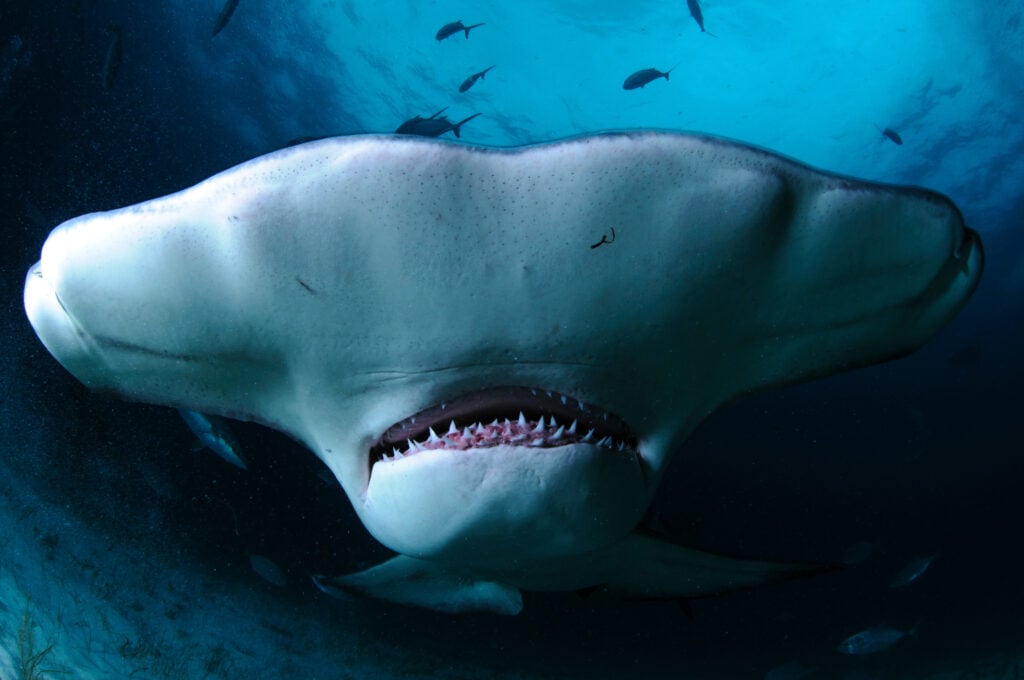
Understanding the physiology of shark sleep involves examining gill function and how the brain manages periods of rest. These insights shed light on the evolutionary adaptations sharks have developed to maintain vital processes while in a state of decreased awareness.
Gill Function and Respiration During Rest
Oxygen is crucial for survival, and the unique respiratory system of sharks allows them to efficiently extract it from water. During periods of rest, many sharks continue to swim slowly to pass water over their gills, ensuring a continuous supply of oxygen. This process, known as ‘ram ventilation,’ is obligatory for some species, meaning they must swim to breathe and thus cannot enter a state of rest as most terrestrial animals do. However, several species of sharks have evolved buccal pumping: an active method of respiration whereby the shark actively draws water into its mouth and over its gills, allowing it to rest while stationary.
Brain Activity and Consciousness
Studies on brain activity during shark rest have provided evidence of certain physiological landmarks of sleep, similar to those found in mammals. Although sharks do not exhibit rapid eye movements (REM), characteristic of human sleep, there are signs of altered states of consciousness. The brain of a resting shark displays a reduction in the overall activity, suggesting a decreased metabolic rate. Nonetheless, sharks remain sufficiently conscious to maintain the pumping action of their gills and respond to environmental stimuli. This level of consciousness is essential for survival, allowing sharks to stay alert to potential threats even while resting.
Shark Sleep Behaviors

Research into shark sleep behaviors has revealed a range of patterns across different shark species, highlighting variations in nocturnal and diurnal activity, as well as the intriguing phenomenon of sleep swimming.
Differences Among Shark Species
Different shark species exhibit distinct sleep behaviors. Studies such as the one on behavioural sleep in Heterodontus portusjacksoni indicate varying sleep patterns among species. For instance, the nurse shark often remains motionless on the sea floor during resting periods, potentially indicating sleep. In contrast, species like the great white shark and the lemon shark are often observed on the move, which may suggest a type of sleep swimming behavior.
Nocturnal and Diurnal Activity
Sharks display diverse activity rhythms that are species-specific. Some, like the nurse shark, are primarily nocturnal, becoming more active at night in search of food. This is in contrast to certain hammerhead sharks, which might engage more during the day. The Caribbean reef shark showcases such species-varied activity that informs scientists about its sleep-wake patterns.
Locomotion and Sleep Swimming
The concept of sleep swimming—a state where sharks are in motion even during rest—is particularly fascinating. This behavior is vital for species that need to keep water moving over their gills to breathe, such as the whale shark. Movements during this state are generally slower and more deliberate, contrasting with the faster, more energetic swimming required for feeding or escaping predators.
Adaptations for Sleeping in Water

Sharks possess unique physiological adaptations that allow them to rest in water while maintaining critical bodily functions, such as respiration. These adaptations are essential for their survival, enabling them to cope with the challenges that a watery environment poses during periods of reduced consciousness.
Buoyancy and Stationary Resting
Sharks have evolved various methods to maintain buoyancy and achieve a state of stationary rest. They lack the swim bladders that many fish use for buoyancy. Instead, sharks rely on a large, oil-filled liver, which is less dense than water, and their cartilaginous skeleton, which is lighter than bone, to remain buoyant. Some species can achieve a state that resembles sleep by either resting on the ocean floor or using dynamic lift from their pectoral fins to maintain position in the water column.
Breathing Mechanisms in Sleep
To respire while resting, sharks have two main methods: buccal pumping and ram ventilation. Buccal pumping is a process in which sharks actively draw water over their gills through the motion of their cheeks. This method is particularly common in species that rest on the ocean floor, such as the nurse shark.
Ram ventilation, on the other hand, is typically employed by obligate ram ventilators, a category of sharks that must keep swimming to push water over their gills. Some sharks, such as the great white, rely on this method exclusively and are thought to enter a state of reduced activity rather than true sleep, moving more slowly to conserve energy while still maintaining water flow over their gills.
Additionally, some sharks possess a small opening behind their eyes called a spiracle, which can also facilitate water movement across the gills during periods of inactivity. Spiracles are an adaptation that is particularly important for species that spend time lying on the ocean floor, as it allows them to breathe without having to swim.
Implications and Insights from Shark Sleep Studies

Sleep studies in sharks provide crucial information for conservation strategies and understanding their role in the marine ecosystem. Research findings facilitate better human-shark interactions and influence future scientific inquiries in marine biology.
Shark Conservation and Human Interaction
Marine biologists have discovered that understanding the sleep habits of sharks is pivotal to conservation efforts. Research showing how sharks may experience periods of rest has implications for how they interact with their environment and with humans. For instance, the study on energy conservation in sleeping sharks highlights the potential vulnerability during rest periods, which is essential for managing human activities like fishing in regions like the Atlantic Ocean to avoid disrupting shark habitats and behaviour.
Future Directions for Marine Biology Research
The insights gained from shark sleep patterns are igniting new study avenues within marine biology research. Investigations into the evolution of sleep in marine life and homeostatic regulation in sharks, as suggested by behavioral sleep studies, can lead to a comprehensive understanding of sleep across different species. Detailed studies on behavioural sleep in buccal pumping sharks further reveal unique physiological processes that could redefine the very concept of sleep in aquatic organisms. These directions not only fortify conservation methodologies but also unravel the complexities of marine life’s adaptation and survival mechanisms.


Add comment