

The Helicoprion is an enigmatic genus of extinct cartilaginous fish that has captivated scientists and the public alike with its unique spiral-toothed jaw. This fascinating creature swam the prehistoric oceans during the late Carboniferous to the early Permian, about 290 million years ago. The most defining and striking feature of the Helicoprion is undoubtedly its tooth whorl—a spiral arrangement of teeth that resembles a buzz saw. This peculiar dental structure has been the subject of extensive research and debate, as it presents a window into the diverse and often bizarre evolutionary adaptations of ancient marine life.
Fossils of Helicoprion have been discovered in various locations around the world, offering valuable insights into its biological and ecological characteristics. Despite being primarily known from these fossilized tooth whorls, recent advancements in imaging technology, such as CT scans, have helped clarify the anatomy and function of Helicoprion’s unique teeth. Unlike many other marine predators of the time, the Helicoprion did not shed its teeth but rather retained them, adding new ones as it grew, resulting in the characteristic spiral formation.
Taxonomy and Evolution

The Helicoprion is an enigmatic genus that presents a complex narrative within the tapestry of prehistoric life. Its placement in the evolutionary history of sharks and the unique tooth whorl structure continues to shed light on the diversity of early cartilaginous fishes.
Phylogeny
The phylogeny of Helicoprion is deeply rooted in the group Eugeneodontida, a subset of Euchondrocephali. This ancient lineage is characterized by peculiar tooth arrangements, often forming spiral whorls, a notable feature of Helicoprion. These evolutionary traits are consistent with a shared ancestry with other Paleozoic chondrichthyan fish, a lineage that includes both sharks and rays.
Eugeneodont Fish Origins
Helicoprion is part of the broader group known as eugeneodont fish, which are acknowledged for their distinctive tooth whorls. This group thrived primarily during the late Carboniferous to the early Triassic periods. The unique dental adaptations of eugeneodont fish provide critical insight into evolutionary developmental processes, particularly the morphological changes leading to specialized feeding mechanisms.
Relation to Chimaeras
Lastly, the Helicoprion’s evolutionary relationship to chimaeras, or ghost sharks, has been reaffirmed by comparisons of their jaw structure and teeth. Similar to embryonic chimaeriforms, Helicoprion displays a tooth pattern that suggests a close kinship. Moreover, comparison with the dentition of other predatory fish, such as Edestus, strengthens the connective thread between these Paleozoic creatures and modern-day chimaeras, highlighting the evolutionary continuity of chondrichthyan fish.
Anatomy and Morphology

The anatomy and morphology of Helicoprion are distinctive, featuring a unique tooth whorl, specialized jaw structure, and notable body characteristics that have intrigued scientists for years.
Tooth Whorls
The tooth whorls of Helicoprion are one of its most remarkable features. These spiral structures consist of numerous serrated and triangular teeth that form a continuous, curved shape resembling a saw blade. Investigations using CT images reveal that this spiral saw functioned as a self-sharpening system, playing a crucial role in the creature’s feeding mechanism.
Jaw Structure
Helicoprion possessed a highly unusual jaw structure that supported the maintenance and functionality of their signature tooth whorls. Their lower jaw was extended to house the tooth whorl, while it is hypothesized that the upper jaw played a lesser role in the mechanism of feeding. Compelling functional morphology studies suggest that these adaptations enabled efficient cutting and grasping of prey.
Body Size and Dorsal Fin
Estimates of body size indicate that Helicoprion was a sizable fish, with some species reaching up to several meters in length. The construction of the dorsal fin and other body parts, although less understood, are thought to have been similar to other contemporaneous cartilaginous fish. However, the morphological taxobases and precise appearance of Helicoprion remain an active area of study, complicating efforts to fully reconstruct its appearance.
Paleontological Discoveries
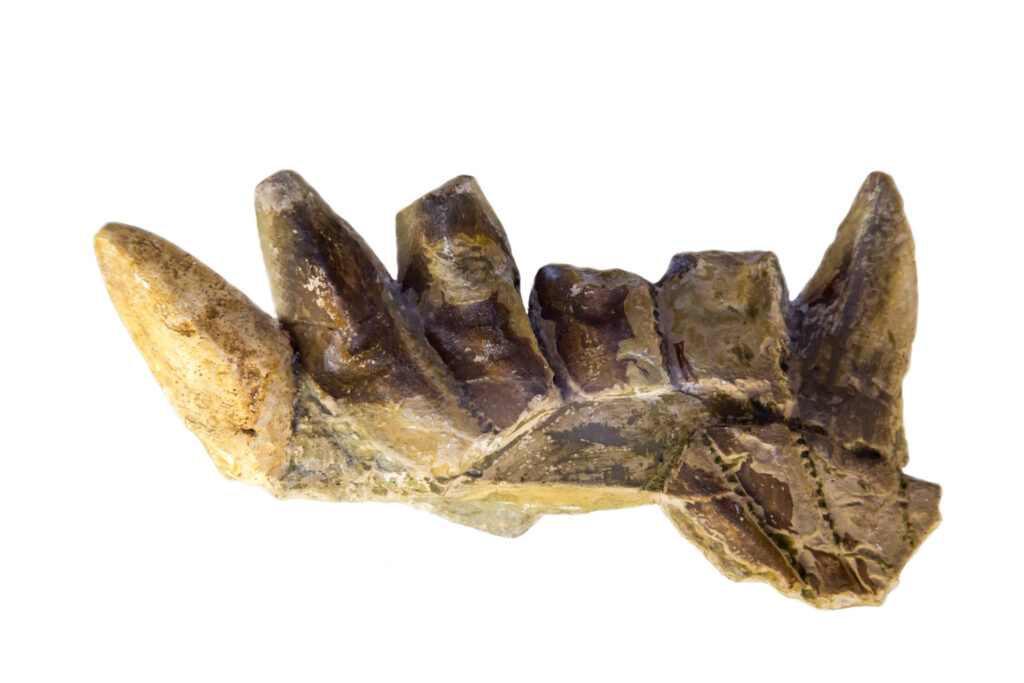
Helicoprion, a prehistoric shark-like fish, has intrigued paleontologists with its distinctive spiral tooth whorl. Fossil evidence across various global sites has contributed significantly to the understanding of this genus, particularly from the Permian Period to the Early Triassic era.
Permian Period Fossils
Fossils of Helicoprion date back primarily to the Permian Period, often identified by their unique tooth whorls. The recent discovery of the tenth species of Helicoprion enlightened the scientific community on the species’ diversity. A notable specimen resides at the Idaho Museum of Natural History, labeled IMNH 37899, representing one of the most complete Helicoprion specimens.
-
Significant Specimens: One such significant fossil discovered during road construction in Idaho suggests an expansive geographic range for the species. More about this discovery can be found in the research discussing the unraveling of species concepts.
-
Global Finds: Additionally, fossils have been uncovered in the Ural Mountains of Russia, adding to the body of knowledge about Permian marine life and the evolution of chondrichthyans.
Early Triassic Evidence
Although predominantly known from the Permian Period, there is evidence of Helicoprion’s persistence into the Early Triassic. This revelation marks the genus as a survivor of the Permo-Triassic mass extinction event, showcasing their adaptability.
- Continued Existence: The discovery of fossils post-Permian Period indicates that Helicoprion was able to endure environmental shifts that many other species could not.
Fossil Sites and Specimens
A variety of fossil sites have provided valuable information about the Helicoprion, illustrating a widespread distribution across different continents during the Paleozoic era.
-
China: The first record of Helicoprion in China brought to light the most complete fossil dentition of helicoprionids from this region, contributing significantly to biostratigraphy and paleoecological studies.
-
Japan Findings: A study in Japan unearthed a fossil in a Fusulina-limestone, which invited a fresh perspective on the species’ ecology and distribution.
Feeding Mechanisms

The unique jaw structure and dental arrangement of Helicoprion were pivotal to its feeding methods, suggesting a highly specialized approach to prey consumption.
Prehistoric Diet
Helicoprion is believed to have primarily targeted soft-bodied prey in its diet. This was inferred from the study of its mouth apparatus that shows little adaptation for cracking hard-shelled prey. A study reconstructing the feeding mechanism of Helicoprion indicates that the fish’s jaws could have functioned efficiently to capture and process their preferred meal.
Adaptation for Feeding
The fish’s feeding apparatus reveals significant evolutionary adaptations. The muscular structure, revealed by muscle scars indicating muscle cross-sectional area, suggests strong and capable motions to facilitate its unique feeding style. Furthermore, these adaptations highlight a significant divergent evolutionary path in the context of feeding mechanisms compared to other marine predators of the same era.
Spiral Saw Theory
The most distinct feature of Helicoprion is the spiral saw, or tooth-whorl, which has puzzled scientists for years regarding its function. According to biomechanical models, it is believed that the tooth-whorl was not merely for show but played a critical role in grasping and macerating prey. This “saw” likely moved prey towards the throat during the feeding process, indicating a complex and unique predation technique among the ancient aquatic fauna.
Ecological Significance
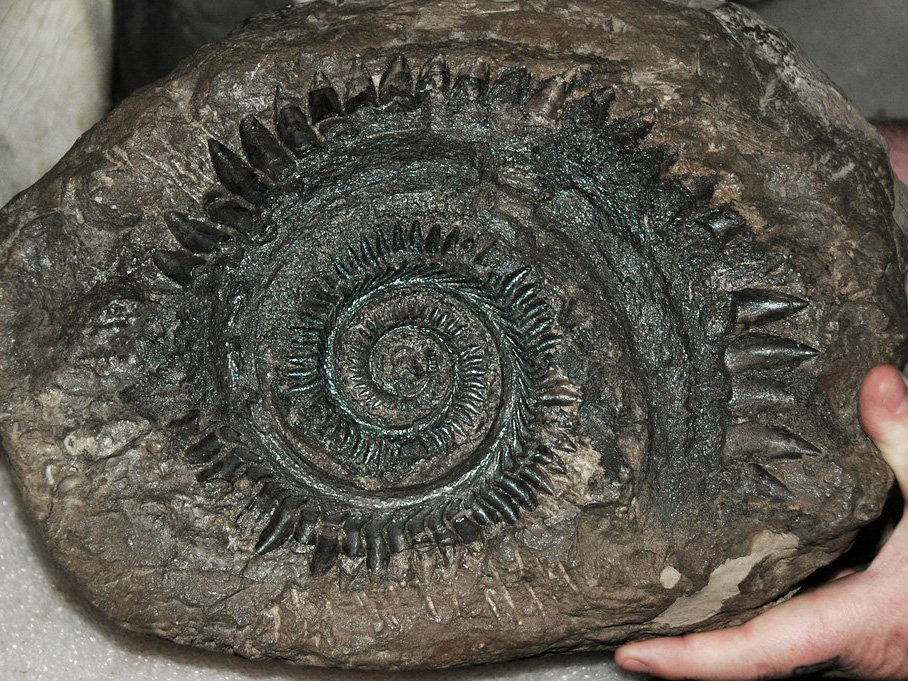
The ecological significance of Helicoprion, an extinct genus of early shark, is highlighted by its unique tooth whorl structure and its role as a marine predator during the Permian era. Understanding Helicoprion’s place in prehistoric marine ecosystems can illuminate patterns of adaptation and survival that preceded the massive Permian-Triassic extinction event.
Role in Permian Oceans
In the Permian oceans, Helicoprion held a pivotal position within the marine food web. Its distinct spiral-toothed jaw, exemplified in species such as H. bessonowi, conceptually compares to the top predators of today’s oceans. This characteristic likely allowed it to process a varied diet, making it an effective predator that potentially influenced the population dynamics of its prey.
Extinction Events
The Permian-Triassic extinction event dramatically reshaped the biodiversity of marine animals. Helicoprion experienced this period of turmoil, but the exact impact on its lineage is less clear. The extinction decimated over 90% of marine species. This event’s severity could suggest a sudden loss of ecological roles that Helicoprion and similar apex predators once filled.
Survival and Adaptation
Despite the severe conditions of the Permian-Triassic extinction event, evidence suggests that Helicoprion exhibited a remarkable capacity for adaptation, which allowed for its persistence into the Triassic. How this genus navigated the shifting environmental and ecological landscapes speaks to a complex interplay of physiological and behavioral adaptations that responded to the changing oceans. Their ability to survive such an event also helps in understanding the evolutionary pressures guiding the adaptation process in marine predators.


Add comment