
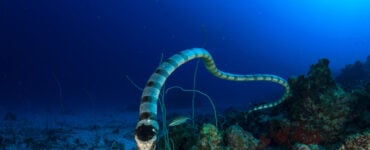
In the warm seas of the Pacific and Indian Oceans, sea snakes, a species of marine snake, can be found. If you see one in the water, you might quickly want to know, are sea snakes poisonous?

They belong to the Elapidae family of terrestrial snakes, which also contains cobras and mambas. Sea snakes have flattened tails and unique scales that enable them to swim effectively and prevent water from getting into their lungs while they are underwater.
These adaptations help sea snakes survive in their marine environment. Sea snakes must periodically surface to breathe air, which is different from other snake species.
They have highly specific venom that is suited to their prey, and they primarily feed on fish and eels.
About Sea Snake Poison
If left untreated, the highly deadly venom of sea snakes can cause severe symptoms in people.

The diverse poisonous compounds found in the venom of sea snakes, which can harm the neurological system, circulatory system, and muscle tissue, include enzymes, peptides, and proteins.
Sea snake venom can have minor to severe side effects, including bruising, pain, nausea, vomiting, headaches, muscle weakness, paralysis, and, in the worst cases, death.
If you are bitten by a sea snake, it’s crucial to get medical help right away since the venom can quickly move throughout the body and inflict catastrophic damage.
Antivenom, pain alleviation, wound care, and constant monitoring of vital signs are possible treatments for sea snake bites.
Sea Snake Venom
The following categories can be used to classify the various types of poisons found in sea snake venom:

Neurotoxins: By obstructing nerve impulses and resulting in paralysis, these toxins have an effect on the nervous system. They can cause symptoms like muscle weakness, respiratory problems, and unconsciousness.
Cardiotoxins: These toxins have an adverse effect on the heart and circulatory system, causing symptoms like erratic pulse, low blood pressure, and heart failure.
Myotoxins are toxins that target muscle tissue and can result in muscle discomfort, edema, and fiber breakdown.
Coagulants: These poisons prevent blood from clotting normally, which causes excessive bleeding.
Hemorrhages: These poisons can induce internal bleeding by destroying blood vessels.
It is important to keep in mind that not all sea snakes produce the same kinds of toxins, and their venom’s composition might change based on the species and area.
While certain sea snakes have venom that is highly deadly and can have serious side effects in people, other sea snakes have less harmful venom.
Can you survive a sea snake bite?
Yes, it is possible to survive a sea snake bite, but it relies on a number of variables, such as the type of sea snake, how much venom was injected, where the bite occurred, and how quickly the victim received medical attention.

Untreated sea snake bites can develop quickly, cause serious symptoms, and possibly result in death.
However, most victims of sea snake bites are able to make a full recovery with prompt and adequate medical care, including antivenom, supportive care, and careful monitoring of vital signs.
Even though the bite is not severe, it is crucial to get medical help right away if you are bitten by a sea snake since the venom can quickly move throughout the body and cause catastrophic harm.
Which sea snake is the most poisonous?
Most people agree that the Indo-Pacific region’s banded sea krait is the most poisonous sea snake.

The banded sea krait’s venom is extremely strong and contains a combination of neurotoxins and myotoxins that can have serious side effects in people. But it’s crucial to remember that every sea snake has the potential to be poisonous, and their venom can be extremely harmful if not handled.
Some sea snake species are more dangerous than others, and the toxicity of sea snake venom can vary depending on the species and the geographic area.
As with any poisonous animals, it is recommended to keep your distance from sea snakes and get medical help right once if you are bitten.
Are sea snakes poisonous to touch?
The answer is no, sea snakes are not poisonous. When a sea snake bites, its teeth release venom, which is mostly employed for protection and hunting.

Envenomation from touching a sea snake is rare to occur, and handling a dead sea snake is harmless as long as the necessary safety measures are done.
Sea snakes can still bite if they feel frightened or startled, therefore handling them is still not advised.
Even though the bite is not severe, it is crucial to get medical help right away if you are bitten by a sea snake since the venom can quickly move throughout the body and cause catastrophic harm.


Add comment