

The ocean, a vast expanse covering over 70% of our planet’s surface, is home to a remarkable variety of life forms. Within its depths, numerous species possess similar appearances, often leading to confusion among even the most ardent ocean enthusiasts.
Unveiling the subtle distinctions between these marine animals not only enriches our understanding but is crucial for their conservation.
Key Takeaways
- Understanding the subtle differences among visually similar marine species is essential for ocean literacy.
- Each marine organism has unique traits that distinguish it from its counterparts, aiding in species identification.
- Increased awareness and knowledge contribute to conservation efforts and the protection of ocean biodiversity.
Unveiling Marine Doppelgängers

The underwater realm is teeming with creatures ranging from the microscopic zooplankton to the colossal blue whale. Amidst this biodiversity, certain marine species share a striking resemblance that can puzzle even seasoned observers. Discovering the subtle differences aids in distinguishing these lookalike inhabitants of the sea.
Dolphins and Porpoises:
- Dolphins: curved dorsal fins, elongated mouths, and pronounced beak-like snouts.
- Porpoises: triangular dorsal fins, shorter mouths, and blunt facial profiles.
Whale Shark and Great White Shark:
- Whale Shark: gigantic size with a wide, flat head, and a spotted body patterns.
- Great White Shark: torpedo-shaped body, iconic dorsally situated sharp fin, noted for predatory traits.
Crabs and Hermit Crabs:
- Crabs: rigid exoskeleton and often wider, flatter carapaces.
- Hermit Crabs: softer abdomen and a spiral-shaped shell carried on their back.
Marine Turtles and Sea Turtles:
- Marine Turtles: a reference encompassing all species of turtles found in marine environments.
- Sea Turtles: specific to those species like the Hawksbill or the Leatherback, adapted for life in saltwater.
By noting distinctive features such as body shapes, fin structures, and patterns, one can differentiate between the ocean’s similar species.
Distinguishing Marine Bivalves
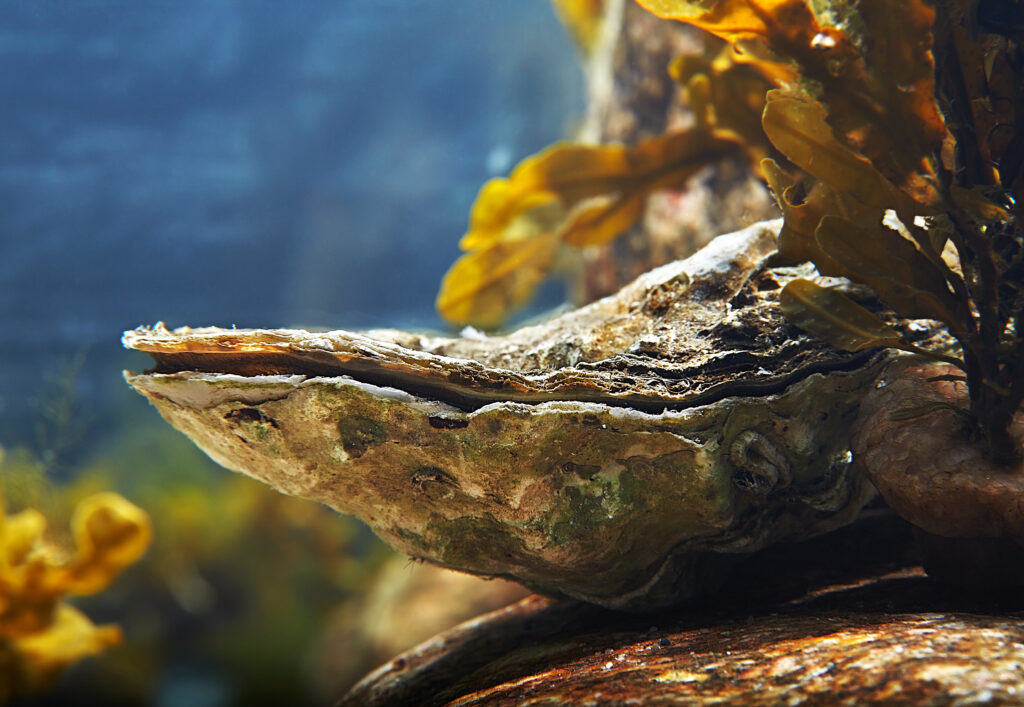
While clams, mussels, and oysters are marine bivalves commonly mistaken for one another, distinctions can be observed upon closer inspection. The following traits set them apart:
- Clams: Possess round, sturdy shells of equal size, embodying a classic oval shape.
- Mussels: Display blue to black shells, notably elongated and perhaps with an iridescent touch.
- Oysters: Their shells are typically more irregular and textured, varying in color from brown to white or gray.
Although similar, each bivalve also plays a unique role in the marine ecosystem, including the nurturing of algae colonies.
Sea Stars vs Brittle Stars: Distinct Echinoderms

- Radial Symmetry: Both creatures feature bodies that can be split into evenly matched parts around a central axis, similar to the way petals are arranged around the core of a flower.
- Texture: Their exteriors are firm and covered with spines.
- Arms:
- Sea Stars: Their arms are stout and take on a triangular shape, broadening where they join the body’s midsection, reminiscent of the classic star shape.
- Brittle Stars: They boast slender, flexible arms that resemble whips, connected to a noticeable central disk, marking a clear distinction between the appendages and the main body.
Understanding these attributes leads to effortless identification of each species. Discover additional distinguishing features, enabling an appreciation of the subtle nuances that define these oceanic inhabitants.
Stingrays and Skates

Stingrays and skates are often mistaken for one another due to their similar flat body shapes that resemble kites. These creatures are part of the diverse Batoidea group, which contains over 600 different species. They share a distinctive feature of large pectoral fins that resemble wings, allowing them to gracefully maneuver across the ocean floor.
Identifying Features:
- Tail: Stingrays have long, slender tails equipped with a sharp barb used for self-defense, while skates have shorter, fleshier tails without any stingers.
- Size: Though not a definitive rule, stingrays commonly outsize skates.
Habitat and Behavior:
- Both animals prefer the sandy sea bottom, aiding in camouflage and as a strategy to capture prey or avoid predators.
Additional Differences:
- Movement: They swim by rippling their pectoral fins through the water, a movement akin to flying.
- Body Size: Stingrays typically achieve greater overall size than their skate counterparts.
For those interested in differentiating these two aquatic animals further, look at their tails and closely observe their sizes and habitats.
Seals and Sea Lions

Pinnipeds are a distinctive group of marine mammals that include seals, sea lions, and walruses. This category consists of 32 species with some categorized as fur seals and sea lions, while others are grouped as true seals.
- Distinguishing Features:
- Ears: Sea lions possess small external flaps over their ears, while true seals lack visible ear flaps and have only ear holes.
- Limbs: Sea lions boast elongated front flippers, aiding their movement through water and allowing them to ambulate on land. Conversely, seals have shorter front flippers and tend to undulate along the ground on their stomachs when on land.
These aquatic animals can often be spotted lounging on coastal areas or darting through ocean waters. True seals and sea lions share common habitats but they differ significantly in physical characteristics and movement.
Despite the challenges in distinguishing among pinniped species, it’s universally recognized that they all play vital roles in marine ecosystems. Organizations such as Ocean Conservancy are at the forefront of addressing key threats to marine life, encompassing plastic pollution, climate alteration, and unsafe drilling practices. Engaging in conservation efforts is crucial in safeguarding the diverse and intricate oceanic habitats these creatures depend on.
Commonly Misidentified Marine Animals
Marine Species Often Confused for Each Other
There are several marine species that enthusiasts and even experts sometimes mix up. For instance, dolphins and porpoises, despite their similar appearances, are distinct; porpoises are generally shorter with rounded faces. Seals and sea lions are another pair often mistaken for one another, but sea lions have external ear flaps and are more agile on land due to their rotating hip bones.
Distinguishing Features of Look-alike Marine Animals
Recognizing different sea creatures that look similar often depends on observing specific traits. Here’s how to tell a few pairs apart:
- Dolphins vs. Porpoises: Dolphins have a more pronounced beak and curved dorsal fins, while porpoises have smaller mouths and triangular dorsal fins.
- Seals vs. Sea Lions: Seals have shorter flippers and move on land by wriggling, whereas sea lions use large, flipper-like limbs to “walk” on land.
Identifying Unique Characteristics of Sea Creatures
Unique identifiers are critical for distinguishing between similar marine animals. These markers can include:
- Color patterns: Zebra sharks, not to be confused with tiger sharks, have distinctive stripes and spots.
- Body shape: The manatee’s paddle-like tail differentiates it from the seal, which has a forked tail.
Misunderstood Sea Animals
Certain marine animals are misunderstood or incorrectly identified due to their deceptive appearances. For example, the manta ray is sometimes feared for its size, but it is harmless and does not have a stinging barb like its relative, the stingray.
Defining Traits of Adorable Marine Creatures
Popular ‘cute’ sea creatures have distinguishing features that endear them to people:
- Sea otters: Recognizable for their floating habits and use of tools.
- Pufferfish: Known for their ability to inflate into a ball shape.
Rare and Charming Marine Animals
A few marine animals are rare and admired for their unique charm:
- Leafy Sea Dragon: This seahorse relative is admired for its leaf-like appendages.
- Narwhal: Known as the ‘unicorn of the sea’, the narwhal has a distinctive long tusk, which is actually an elongated tooth.
Add comment