

The world of amphibians is vast and diverse, with salamanders standing out as some of the most fascinating creatures in this category. As remarkable as they are in terms of their unique features, a particular aspect that piques the interest of many is the size of these creatures. For salamander enthusiasts and researchers alike, the discovery of the biggest salamander ever recorded becomes a topic worth exploring.
Salamanders belong to the family Plethodontidae, and they are found across continents in various habitats, ranging from forests to freshwater ecosystems. Over time and thanks to continued research, it has been observed that there are significant variations in salamander sizes. From smaller species occupying forest litter to larger ones dwelling in water bodies, these intriguing creatures never cease to amaze with their diversity.
One might ask, what is the record for the biggest salamander ever discovered? This question invites both seasoned experts and curious individuals to delve deeper into the world of salamanders and their habitats, while increasing our collective knowledge and appreciation for these captivating amphibians.
Japanese Giant Salamander

The giant salamander is an impressive and essential member of the amphibian world. Belonging to the family Cryptobranchidae, these salamanders are the largest amphibians in existence today. With their fascinating size, unique features, and intriguing behavior, they have captured the attention of scientists and animal enthusiasts alike.
One of the most well-known species of giant salamanders is the Chinese giant salamander (Andrias davidianus). This extraordinary creature can grow up to 1.5 meters in length, making it the largest amphibian on the planet. Its massive size and distinct wrinkled skin set it apart from other amphibian species. However, giant salamanders are not limited to China, as Japan and the United States are also home to unique species in this remarkable family.
Giant salamanders exhibit unique behaviors that add to their captivating allure. They primarily lead an aquatic lifestyle, dwelling in freshwater rivers and streams. As nocturnal animals, they emerge at night to hunt for their prey, including fish, frogs, and other small aquatic animals. Giant salamanders are quite sensitive to changes in their environment, making them valuable indicators of ecosystem health.
As amazing as these creatures are, it’s important to acknowledge that they face several significant threats. Many giant salamander species are now considered endangered due to habitat loss, pollution, and over-collection for the pet trade. Preservation efforts are underway to conserve these incredible amphibians and the habitats they depend on for survival.
Though they may not be as well-known as some reptiles and other amphibian species, giant salamanders are undoubtedly deserving of admiration and respect for their size, unique adaptations, and their vital role in maintaining healthy aquatic ecosystems. Educating ourselves and spreading awareness about these awe-inspiring creatures can contribute to their continued survival and the preservation of the diverse world of amphibians to which they belong.
Threats and Conservation
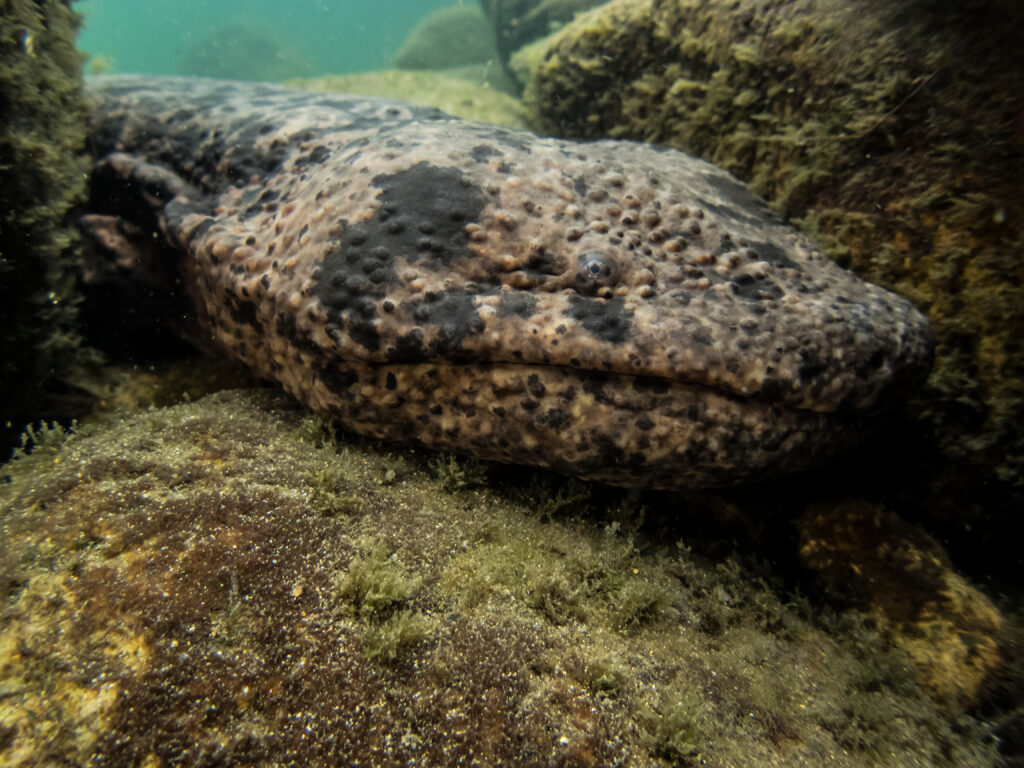
The Chinese giant salamander (Andrias davidianus) is the largest living amphibian in the world, reaching lengths of up to 1.8 meters. They are primarily found in the freshwater streams of China’s mountainous regions, where they feed on insects, fish, and shrimp. Unfortunately, these incredible creatures are critically endangered according to the International Union for Conservation of Nature (IUCN).
There are multiple threats to the survival of the Chinese giant salamander, including habitat loss, pollution, and overexploitation. Their natural habitats, such as streams and freshwater systems, have suffered significant damage due to human activities like farming and infrastructure development. Accelerated habitat destruction has led to shrinking wild populations of this species.
In addition to environmental challenges, the demand for giant salamanders in farms has severely impacted their populations. The amphibians are considered a delicacy in certain regions of China, which has fueled their commercial overexploitation. To make matters worse, they also face predation from non-native species like shrimp. Consequently, populations have declined drastically, and conservation efforts are now more important than ever.
The Zoological Society of London and other organizations have joined forces to create and implement conservation strategies for the Chinese giant salamander. One of these strategies involves the reintroduction of captive-reared juvenile salamanders to their natural habitats. Alongside these reintroductions, monitoring the health and genetic diversity of the animals is crucial to ensure the success and viability of new populations.
Preserving the habitat of the Chinese giant salamander is essential, too. Some efforts are being made to combat illegal fishing and hunting of these animals. Additionally, work is underway to improve habitat quality and reduce other threats such as pollution.
Internationally, the Convention on International Trade in Endangered Species of Wild Fauna and Flora (CITES) has placed the Chinese giant salamander in Appendix I, which offers the highest level of protection against international trade. This status further emphasizes the need for collaborative efforts to save this unique and remarkable species.
Biology and Lifestyle

The biology and lifestyle of the largest salamander ever recorded are truly fascinating. These extraordinary amphibians have a unique brown color which helps them camouflage in their natural habitat. They usually have an intricate pattern on their skin, allowing them to blend in with the surroundings when hunting for prey. Researchers have been captivated by these fascinating creatures, as they exhibit a range of interesting characteristics and behaviors.
Salamanders are known for their superb hunting skills. They primarily prey on small aquatic animals such as crabs and crayfish, using their keen senses and swift reflexes to capture their prey. Their diet is crucial to maintain their large size and energy requirements, particularly during the breeding season.
One remarkable feature of these salamanders is their distinct gill slits, which allow them to efficiently extract oxygen from the water. These gills reflect their semi-aquatic lifestyle, as they spend a considerable amount of their life in the water or in mud. Their skin color helps them to blend in as they navigate through these muddy habitats.
Breeding season is a significant period in the life of the largest salamander species, as it presents an important opportunity for them to reproduce and carry on their genes. In captivity, these salamanders are known to experience changes in their behavior during the breeding season, with some researchers observing an increase in aggression and complex mating rituals. The vulnerability of the species highlights the importance of understanding and supporting their breeding habits.
The farming industry’s impact on these salamanders can be detrimental, as their habitats are often disturbed or destroyed due to human activities. Efforts from zoos and natural history museums help raise awareness about the conservation of the species, as their unique biology and lifestyle are a valuable part of the ecosystem’s diversity.
Researchers have been studying the DNA of these salamanders to understand their evolutionary history and help protect them from extinction. As part of the Eukaryota domain, the largest salamander species holds significant value for scientific research, providing insights into the genetics and adaptations of these ancient amphibians.



Add comment