
Coconut trees and palm trees are often confused with each other due to their similar appearance.

However, they are two different types of trees that belong to different plant families. While both trees are known for their tropical beauty, they differ in many aspects, such as their physical characteristics, habitat, and uses.
While both trees are native to tropical regions, they differ in their physical characteristics, habitat, and uses.
Read on below to learn more!
Table of Contents
Key Takeaways
- Palm trees and coconut trees are two different types of trees that belong to different plant families.
- Palm trees belong to the family Arecaceae, while coconut trees belong to the family Palmae.
- Both trees are native to tropical regions and differ in their physical characteristics, habitat, and uses.
Palm Tree vs Coconut Tree

Palm trees and coconut trees are two of the most recognizable tree species in the world. Both belong to the Arecaceae family, which is also known as the palm family.
The coconut tree, also known as Cocos nucifera, is a member of the genus Cocos, while the palm tree is a member of the genus Phoenix.
Coconut trees and palm trees share many similarities, but they also have some distinct differences. For example, both species are tall, slender trees with long, feathery leaves that grow in a spiral pattern.
They both produce fruit that is prized for its nutritional value and versatility. However, coconut trees are unique in that they produce coconuts, while palm trees produce dates, oil, and other fruits.
One of the key differences between coconut trees and palm trees is their size. Coconut trees can grow up to 100 feet tall, while palm trees typically reach a height of 50 to 80 feet.
Additionally, coconut trees have a more slender trunk than palm trees, which tend to be thicker and more robust.
Another difference between the two species is their geographic distribution. Coconut trees are primarily found in tropical regions, while palm trees are found in a wider range of climates, including subtropical and temperate regions.
Some of the most well-known palm tree species include the Phoenix dactylifera, which produces dates, and the Elaeis guineensis, which is used to produce palm oil.
Despite their differences, coconut trees and palm trees are both important tree species that play a vital role in the ecosystems where they grow.
They provide habitat for a wide range of animals, including birds, insects, and mammals. They also help to stabilize soil and prevent erosion, and they are an important source of food and income for many communities around the world.
Physical Characteristics
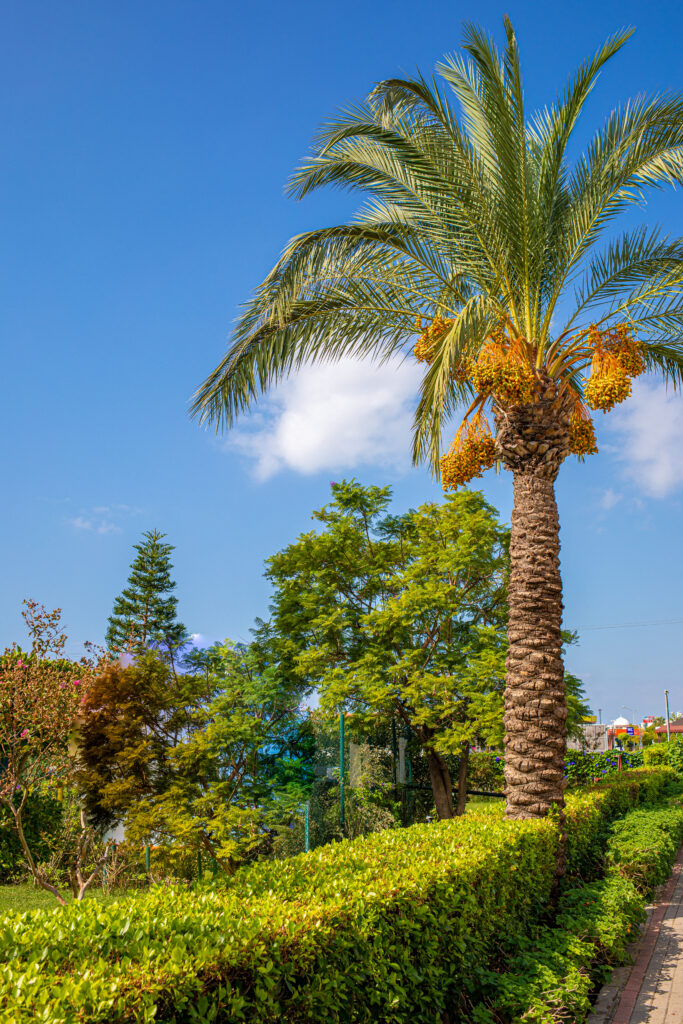
Coconut trees and palm trees are both tall and slender, but they differ in terms of their height and size.
Coconut trees can grow up to 30 meters in height, while palm trees can grow up to 60 meters. Palm trees are generally larger in size than coconut trees, with thicker trunks and more foliage.
Shape and Texture
Coconut trees have a columnar trunk with slender trunks that are smooth in texture. Palm trees, on the other hand, have a scaly texture on their trunks.
The shape of the leaves is also different between the two trees. Coconut trees have fan-shaped leaves, while palm trees have fan-like fronds that curve gracefully.
Color and Appearance
The color and appearance of coconut trees and palm trees are also different. Coconut trees have a greenish-brown color, while palm trees have a grayish-brown color.
The texture of the bark is also different, with coconut trees having a smoother texture than palm trees.
Habitat and Growth

Coconut trees and palm trees are both tropical plants that require warm temperatures to grow. They thrive in full sun and need a lot of humidity to grow properly.
These trees are commonly found in tropical regions and forests where the climate is warm and humid. They require a lot of rainfall to grow, and sandy soil is ideal for their growth.
Coconut trees prefer a more coastal climate, while palm trees can grow in a wider range of climates. Palm trees can grow in both tropical and subtropical regions.
They can tolerate slightly cooler temperatures than coconut trees and can survive in areas with less humidity.
Soil and Sunlight Needs
Both coconut trees and palm trees require well-draining soil to grow properly. They can tolerate a range of soil types, including sandy soil and loamy soil.
Coconut trees prefer soil with a higher nutrient content, while palm trees can tolerate soil with lower nutrient content.
Coconut trees require full sun to grow properly, while palm trees can tolerate partial shade.
Palm trees can grow in a variety of habitats, including forests and savannas. They have a deep root system that allows them to grow in a variety of soil types and survive in areas with less rainfall.
Varieties of Palm and Coconut Trees
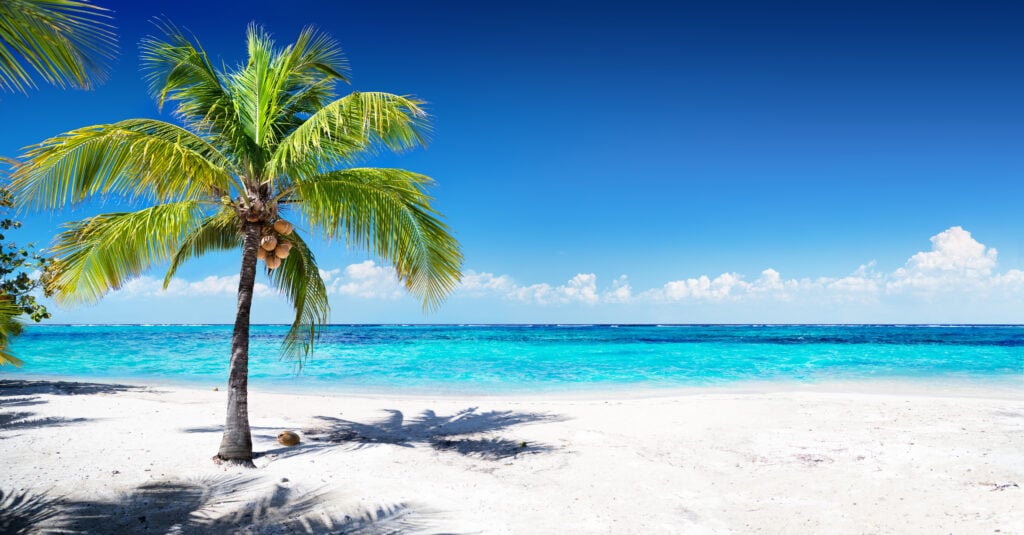
Palm trees and coconut trees belong to the same family, Arecaceae, and share many similarities. However, there are distinct differences between the varieties of each tree.
Dwarf Coconut and Palm Trees
Dwarf coconut trees are shorter than regular coconut trees and produce smaller coconuts. The Fiji Dwarf Coconut is a popular variety that is known for its resistance to pests and diseases.
Another variety, Macapuno Coconut, produces a soft, jelly-like flesh that is used in desserts.
Dwarf palm trees, on the other hand, are smaller than regular palm trees and are often used for landscaping.
The Pindo Palm is a popular dwarf palm tree that produces sweet, edible fruit. Queen Palms are another popular variety that are known for their ornamental value.
Date and Areca Palms
Date palms are known for their sweet, edible fruit and are commonly grown in the Middle East.
The Medjool Date Palm is a popular variety that is known for its large, soft dates. Another variety, the Deglet Noor Date Palm, produces smaller, drier dates that are often used in cooking.
Areca palms, also known as betel palms, are commonly grown in Southeast Asia. The leaves of the Areca Palm are often used to wrap betel nut, a popular stimulant.
The Betel Nut Palm is a popular variety that produces large, flavorful nuts.
Other Notable Varieties
The King Coconut is a popular variety of coconut tree that is commonly grown in Sri Lanka. It produces a sweeter, more flavorful coconut water than regular coconuts.
The Maypan Coconut is a hybrid variety that is resistant to lethal yellowing disease, a common disease that affects coconut trees.
The Pindo Palm is a popular variety of palm tree that is commonly grown in the southern United States. It produces sweet, edible fruit that is often used to make jelly. The Bismarck Palm is another popular variety that is known for its striking blue-green foliage.
Fruits and Nuts

Coconut trees and palm trees are both known for the fruits and nuts they produce. Coconuts are the most well-known fruit of the coconut tree.
They are large, brown, and covered in a fibrous outer layer. Inside the shell, there is a white, fleshy meat that is used in many different culinary applications.
Coconut meat is rich in healthy fats and can be eaten raw or used in cooking. Coconut water is also a popular drink that is known for its hydrating properties.
Dates, on the other hand, are the fruit of the date palm tree. They are small, brown, and have a wrinkled texture.
Dates are high in fiber and are often used as a natural sweetener in recipes. They are also a good source of potassium and other essential nutrients.
Edible Fruits and Their Uses
In addition to coconuts and dates, both coconut trees and palm trees produce other edible fruits. Some examples include:
- Pineapple: A tropical fruit that is often used in desserts and drinks.
- Mango: A sweet and juicy fruit that is a popular ingredient in smoothies and salads.
- Papaya: A tropical fruit that is often eaten raw or used in smoothies and salads.
- Banana: A versatile fruit that is used in many different culinary applications, from breakfast dishes to desserts.
Yellow flowers are also produced by both coconut trees and palm trees. These flowers are often used in traditional medicine and are believed to have various health benefits.
Uses of Palm and Coconut Trees
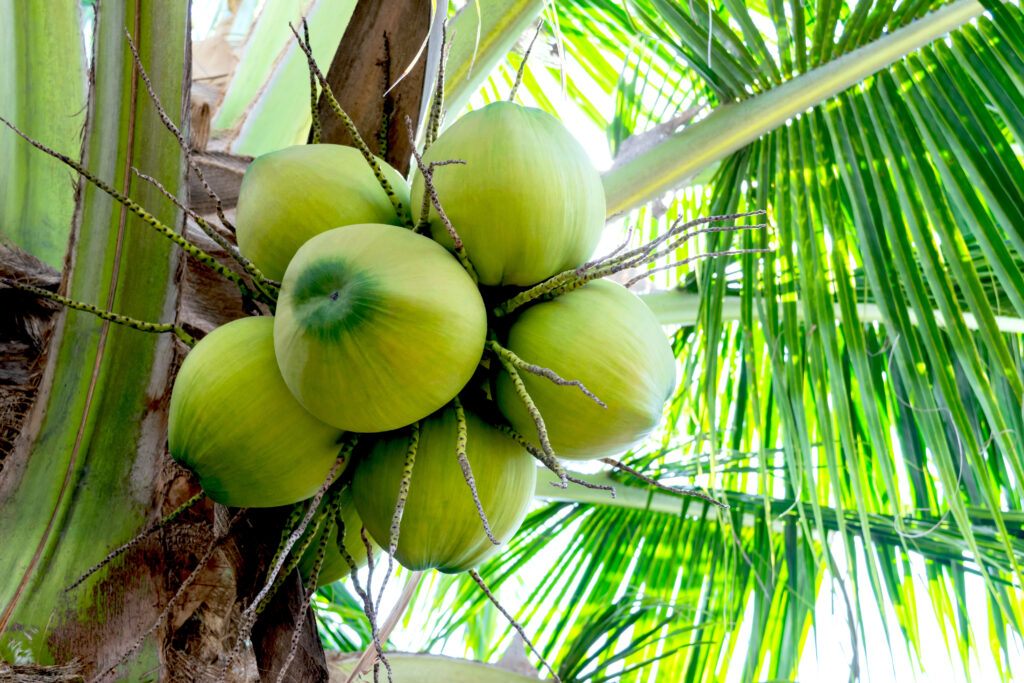
Palm and coconut trees are both highly versatile and valuable plants that have been utilized by humans for centuries.
These trees have a wide range of uses, including oil production, construction and furniture, and landscaping and ornamental purposes.
Oil Production
Both palm and coconut trees are known for their oil production. Palm oil is extracted from the fruit of the oil palm tree and is used in a variety of food and non-food products, including cooking oil, margarine, soap, and cosmetics.
Coconut oil, on the other hand, is extracted from the meat of the coconut and is used in cooking, as well as in the production of soaps, cosmetics, and other household products.
Construction and Furniture
Palm and coconut trees are also commonly used in construction and furniture making. The wood from these trees is strong and durable, making it ideal for use in building homes, furniture, and other structures.
In addition, the leaves and fronds of these trees can be used to create thatched roofs, baskets, and other woven items.
Landscaping and Ornamental Uses
Palm and coconut trees are also popular choices for landscaping and ornamental purposes.
These trees are known for their attractive, tropical appearance, and are often used to create a lush, exotic feel in gardens and other outdoor spaces. In addition, the fruit and flowers of these trees can be used to create decorative arrangements and other ornamental displays.
Geographical Distribution

Coconut trees and palm trees are found in different parts of the world. The geographical distribution of these trees is influenced by various factors such as climate, soil type, and altitude.
In this section, we will explore the distribution of coconut trees and palm trees across different regions of the world.
Asia and Pacific Islands
Coconut trees are widely distributed in Asia and the Pacific Islands. Indonesia is the largest producer of coconuts in the world, followed by the Philippines, India, and Sri Lanka.
These countries have a tropical climate, which is ideal for the growth of coconut trees. Palm trees are also found in these regions, but they are not as widely distributed as coconut trees.
America and Caribbean
In the Americas and the Caribbean, coconut trees are found mainly in coastal regions with a tropical climate.
The Caribbean is home to many coconut plantations, and coconut trees are also found in countries such as Brazil, Mexico, and Colombia. Palm trees are more widely distributed in these regions than coconut trees.
In South America, palm trees are found in the Amazon rainforest and other tropical regions.
Africa and Madagascar
Coconut trees are found mainly in coastal regions of Africa and Madagascar. Countries such as Mozambique, Tanzania, and Madagascar are major producers of coconuts in Africa.
Palm trees are also found in these regions, but they are not as widely distributed as coconut trees. In Madagascar, palm trees are used to make palm wine, a popular alcoholic beverage.
Health Benefits and Nutritional Value

Coconut trees and palm trees are known for their nutritional value and health benefits. Both trees produce various edible products that are rich in vitamins, minerals, and antioxidants.
Coconut Tree
Coconut trees are known for producing coconuts, which are a versatile and nutritious food source.
Coconut water, the clear liquid inside a young green coconut, is a popular drink that is low in calories and high in potassium. It is also rich in electrolytes, making it a great drink for rehydration.
Coconut meat, the white flesh inside a mature coconut, is high in healthy fats, fiber, and protein. It is a great source of medium-chain triglycerides (MCTs), which are easily digested and provide a quick source of energy.
Coconut oil, which is extracted from coconut meat, is also a popular cooking oil that is rich in MCTs.
Palm Tree
Palm trees are known for producing palm sap, which is a sweet, nutrient-rich liquid that is harvested from the tree’s trunk.
Palm sap is a good source of vitamins, minerals, and antioxidants. It is also low in fat and calories, making it a healthy alternative to sugary drinks.
Palm oil, which is extracted from the fruit of the palm tree, is a popular cooking oil that is high in saturated fat.
While palm oil has been linked to health problems, such as heart disease, when consumed in excess, it is still a widely used oil in many parts of the world.
Comparison
When comparing the health benefits and nutritional value of coconut trees and palm trees, it is clear that both have their advantages and disadvantages.
Coconut trees produce a wide range of edible products that are rich in nutrients and healthy fats, while palm trees produce a sweet, low-fat liquid that is high in vitamins and minerals.
Frequently Asked Questions
What are the differences between coconut trees and palm trees?
Coconut trees and palm trees are both members of the Arecaceae family, but they are different species.
Coconut trees are a type of palm tree, but not all palm trees are coconut trees. Coconut trees are known for their large, round fruit, while other palm trees may produce smaller fruits or none at all.
Do all palm trees produce coconuts?
No, not all palm trees produce coconuts. While coconut trees are a type of palm tree that produces coconuts, there are many other types of palm trees that produce different types of fruit or no fruit at all.
Why do some palm trees not have coconuts?
Some palm trees do not have coconuts because they are a different species than coconut trees.
Other palm trees may not produce coconuts because they are not mature enough or because they are not growing in the right conditions.
Can coconut trees and palm trees grow in the same climate?
Coconut trees and other types of palm trees can grow in similar climates, but they may have slightly different environmental requirements.
Coconut trees prefer warm, tropical climates with plenty of sunlight and rainfall, while other palm trees may be able to tolerate slightly cooler temperatures or drier conditions.
What is the average height of a coconut tree compared to a palm tree?
The average height of a coconut tree is around 30 meters, or 98 feet, while the height of other types of palm trees can vary widely depending on the species.
Some palm trees may only reach a height of a few meters, while others can grow as tall as 60 meters, or 197 feet.
Is palm oil derived from the same palm tree as coconuts?
No, palm oil is derived from a different species of palm tree than the coconut tree. Palm oil is typically produced from the fruit of the oil palm tree (Elaeis guineensis), while coconut oil is produced from the fruit of the coconut tree (Cocos nucifera).
Add comment